
Source 1: Image
Samantha Smith’s Letter to Yuri Andropov
November 1982
Russian State Archives
In November 1982, 10-year-old Samantha Smith, from Manchester, Maine, watched a TV show about nuclear war. She asked her mother who would start a war and why. Her mother showed her a magazine article about the United States and the Soviet Union (called Russia today), featuring the new Soviet leader, Yuri Andropov. The news article talked about how people in both countries were worried that the other country would start a nuclear war.
Samantha had the idea of writing to Andropov to find out who was causing all the trouble, so she did! Months went by with no answer. In April 1983, Samantha found out that her letter had been published in a Soviet news magazine called Pravda. Soon, her letter was appearing in newspapers across the United States.
Samantha was excited but also curious as to why Andropov had not responded. Samantha’s father suggested she write another letter to the Soviet Ambassador. A week later, she received a call from the Soviet Embassy, saying Andropov’s letter was on its way. When the letter arrived, it would change Samantha and her family’s lives. It included an invitation for them to visit the Soviet Union, and suddenly, Samantha became a celebrity.
Source 2: Image
Excerpt of Yuri Andropov’s Letter to Samantha Smith
April 19, 1983
Maine State Museum Collection, 2010.37.206
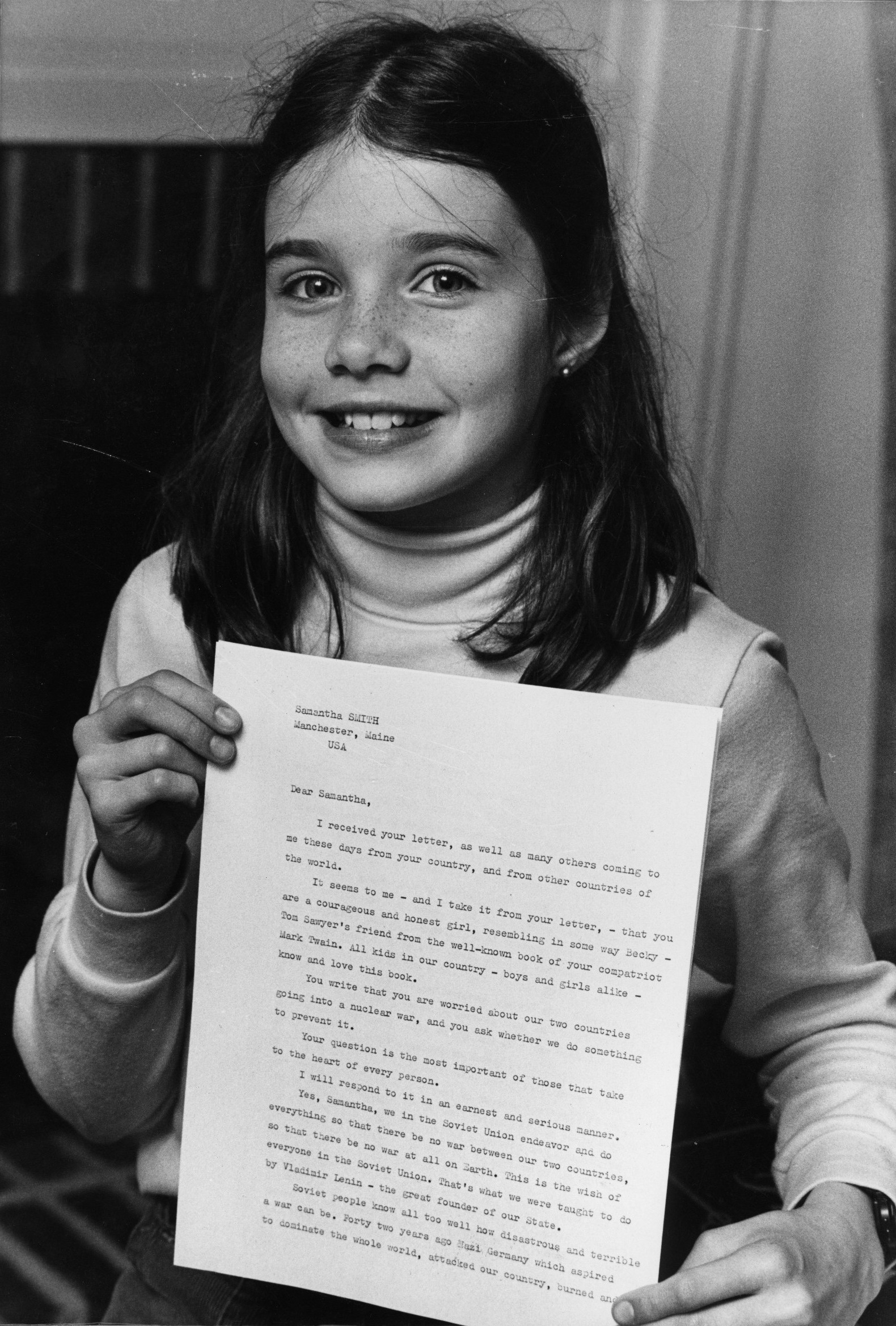 In 1982, ten-year-old Samantha Smith of Manchester, Maine, wrote a letter to the leader of the Soviet Union (called Russia today), Yuri Andropov, asking whether he wanted a nuclear war between the Soviet Union and the United States. This letter is his response. In the letter, Andropov states his country’s desire for peace and invites Samantha and her family to visit the Soviet Union.
Both letters were big news stories! Reporters around the world wanted to speak with Samantha about why she wrote the letter and what she thought of the Soviet leader’s response.
Source 3: Artifact
Artek Camp Uniform worn by Samantha Smith
1983
Maine State Museum Collection, 2010.37.207.1-.4
In Yuri Andropov’s letter to Samantha Smith, he invited Samantha and her family to visit the Soviet Union (now called Russia) and suggested they visit in July. During their trip, they spent some time at the Artek Pioneer Camp in Crimea. The Young Pioneers are a little like Boy Scouts or Girl Scouts, except their activities teach them about communism instead of democracy.
Artek was the most famous summer camp in the Soviet Union. It had 150 buildings, including a space museum and a film studio named Artekfilm. Only the best students and strongest athletes were invited to attend.
While visiting the camps, Samantha wore an Artek Pioneer uniform like the
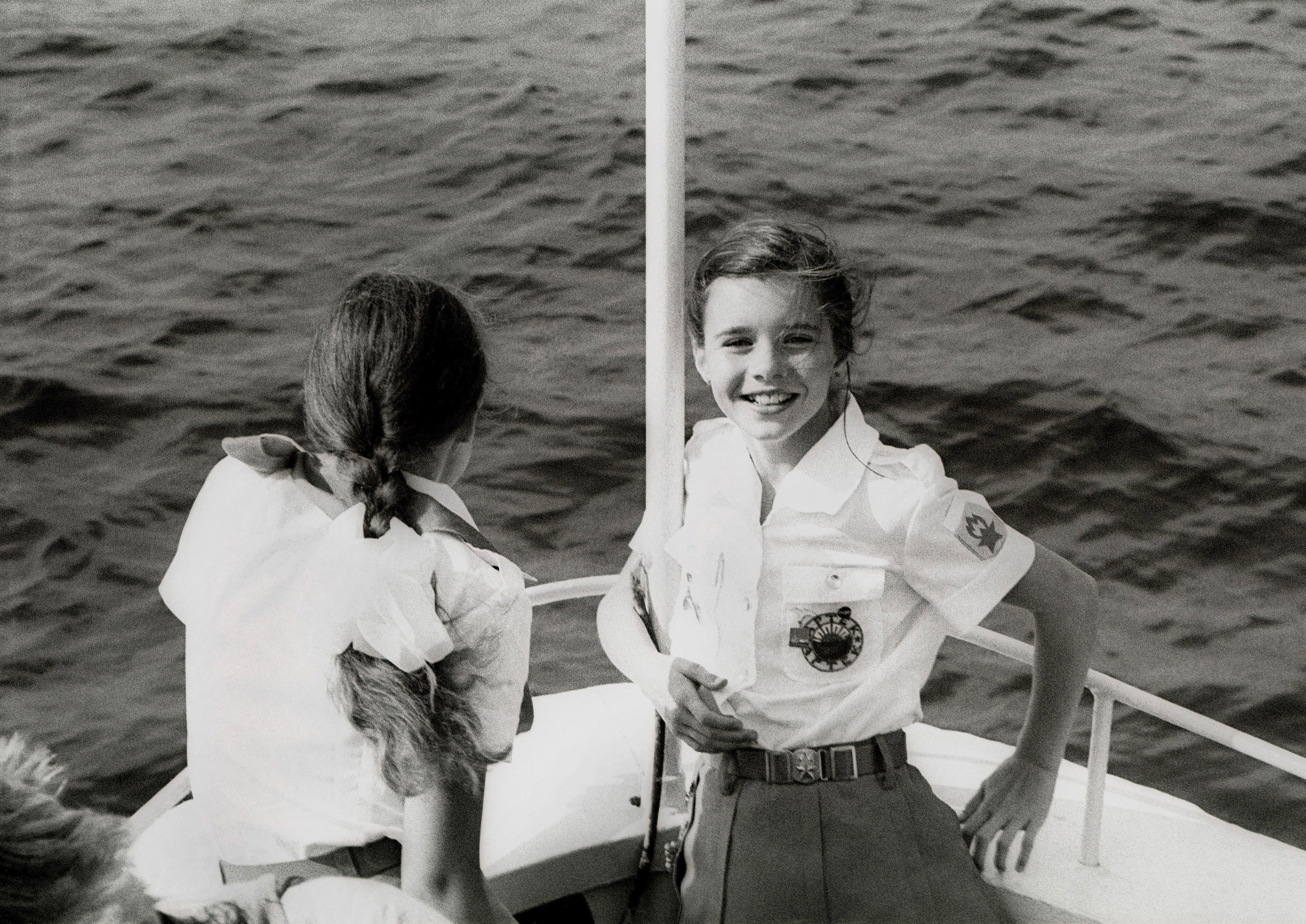
other children, but she didn’t wear a red scarf, so everyone knew she was a guest. While she was at the camp, Samantha swam, learned Russian songs and dances, and made lots of new friends
Source 4: Image
Photo of Samantha Smith talking to the press in her Artek Uniform
July 1983
Photograph by Vladimir Mashatin
Reporters from around the world followed Samantha and her family to Crimea, where she visited the famous Soviet summer camp, Artek. Samantha’s father, Arthur Smith, asked that she be allowed to have fun with other campers and not be followed by photographers all the time.
For the most part, the reporters and photographers kept their distance. One exception was at a meet-and-greet event with campers from different camps who had questions for Samantha about life in the United States.
Reporters at the event quickly took over and asked their own questions about how Samantha liked Artek and about her visit to Moscow.
Source 5: Image
Political Cartoon titled “Samantha”
By Dan Wright
1983
Maine State Museum Collection, 2010.37.145
Dan Wright of the Miami News sent Samantha Smith a copy of a cartoon he drew depicting her trip to the Soviet Union. The Smith family visited the Soviet Union on the invitation of Soviet leader Yuri Andropov after Samantha had written to Andropov advocating for peace. He assured her that he did not plan to start a war. Smith’s letter and subsequent trip received international press coverage.
The cartoon shows two bomb heads, one labeled U.S. and one U.S.S.R., with a girl jumping from one to the other. The caption is “Samantha.” USSR stands for the Union of Soviet Socialist Republics, commonly known as the Soviet Union until it was dissolved in 1991. It is now known as the Russian Federation or simply Russia.
Source 6: Document
Samantha Smith Day Proclamation
May 29, 1987
Maine State Museum Collection, 2010.37
On August 25, 1985, Samantha and her father were flying home when they were killed in an airplane crash in Auburn, Maine. She was 13. Samantha, who had become a celebrity after her trip to the Soviet Union, was returning from filming a television program.
Tributes for Samantha came from world leaders around the globe. Many people in Maine looked for ways to remember Samantha and her quest for peace.
One such effort by Maine Governor John R. McKernan was to issue a special proclamation designating the first Monday in June each year as Samantha Smith Day. Even today, people still remember Samantha and honor her message of peace.