
Using Your Voice: Native Mascots in Maine Schools
Voice and Democracy
In a democracy, people have a say in how the country is run. Citizens get to participate in choosing their leaders, usually by voting in an election. Elected officials represent the people and make decisions on their behalf.
Democracies protect important rights. In the United States, the First Amendment says everyone has the right to speak, share ideas, and be heard. It protects the freedom of speech and helps people work together to solve problems. Not everyone can vote (kids can’t until they are 18), but everyone has a voice and can express their opinions and advocate for change.
Citizens can express their views on issues at public meetings, protests, and by communicating with elected officials. Respecting and accepting others with different viewpoints and different ways of life is an important part of being a good citizen. This helps make Maine and the United States a welcoming place for everyone while creating an environment that encourages healthy debate. In a democracy, people can peacefully talk through their problems and create positive change.
Native Mascots in Maine
Summary: In this lesson, you will look at primary sources that show how the residents of Skowhegan, Maine came to the decision to change their school mascot.
Share whatever information from this introduction you feel will help provide context for your students before they investigate the primary sources.
What’s a Mascot?
Does your school have a mascot? Let’s say your mascot is the “Fighting Cows.” You’d probably have pictures of cows on your team uniforms, signs, and the wall of your gym. If you bought school merchandise like frisbees and water bottles, they’d probably be covered in cows!
You’d dress up in clothes with white and black spots on game day, wear a hat with horns, and ring a cowbell. When your team scored, everyone would yell “moo!”
Now imagine, instead of a cow, your mascot was a type of person. How would that change the way you show school spirit?
What are Native Mascots?
For hundreds of years, Americans of European descent (white Americans) have used pictures of Indigenous people in advertisements, movies, Halloween costumes, and more.
When a school, team, university, or college uses the image of a Native American as their symbol, they have a Native mascot. The team name may be “Indians,” “Chiefs,” or “Braves,” for example. The image is often just the head of a Native person.
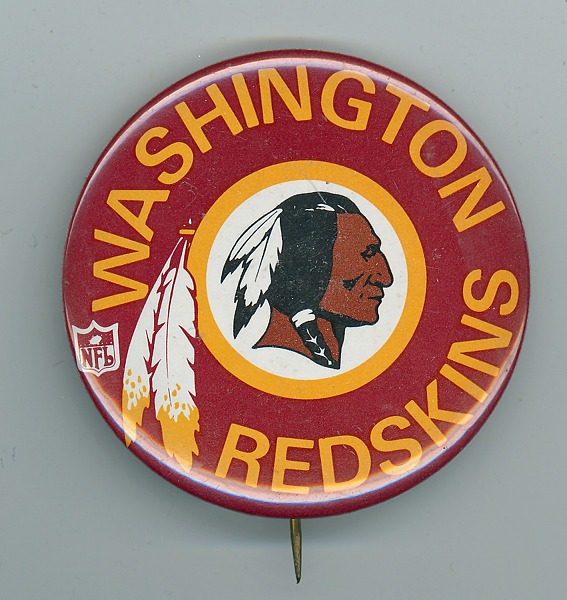
This story goes far beyond Maine. Professional sports teams across the country had Native mascots, though most of them have been changed.
What happened in Skowhegan?
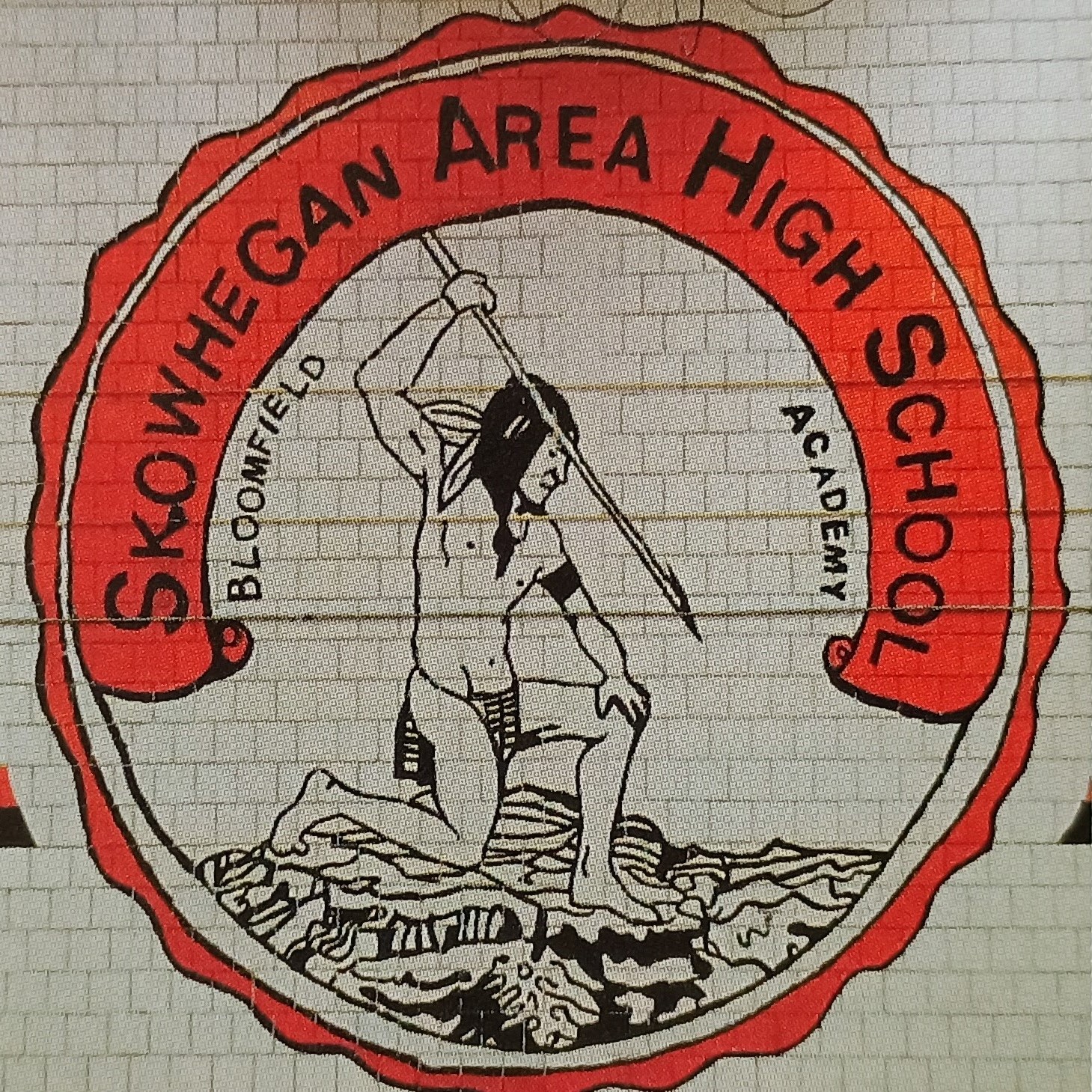
Skowhegan is a town in Maine. For almost 100 years, Skowhegan High School had the name “Indians” as its mascot. An image of a Native American man spearing fish was on the gymnasium wall and the sign welcoming people to the school.
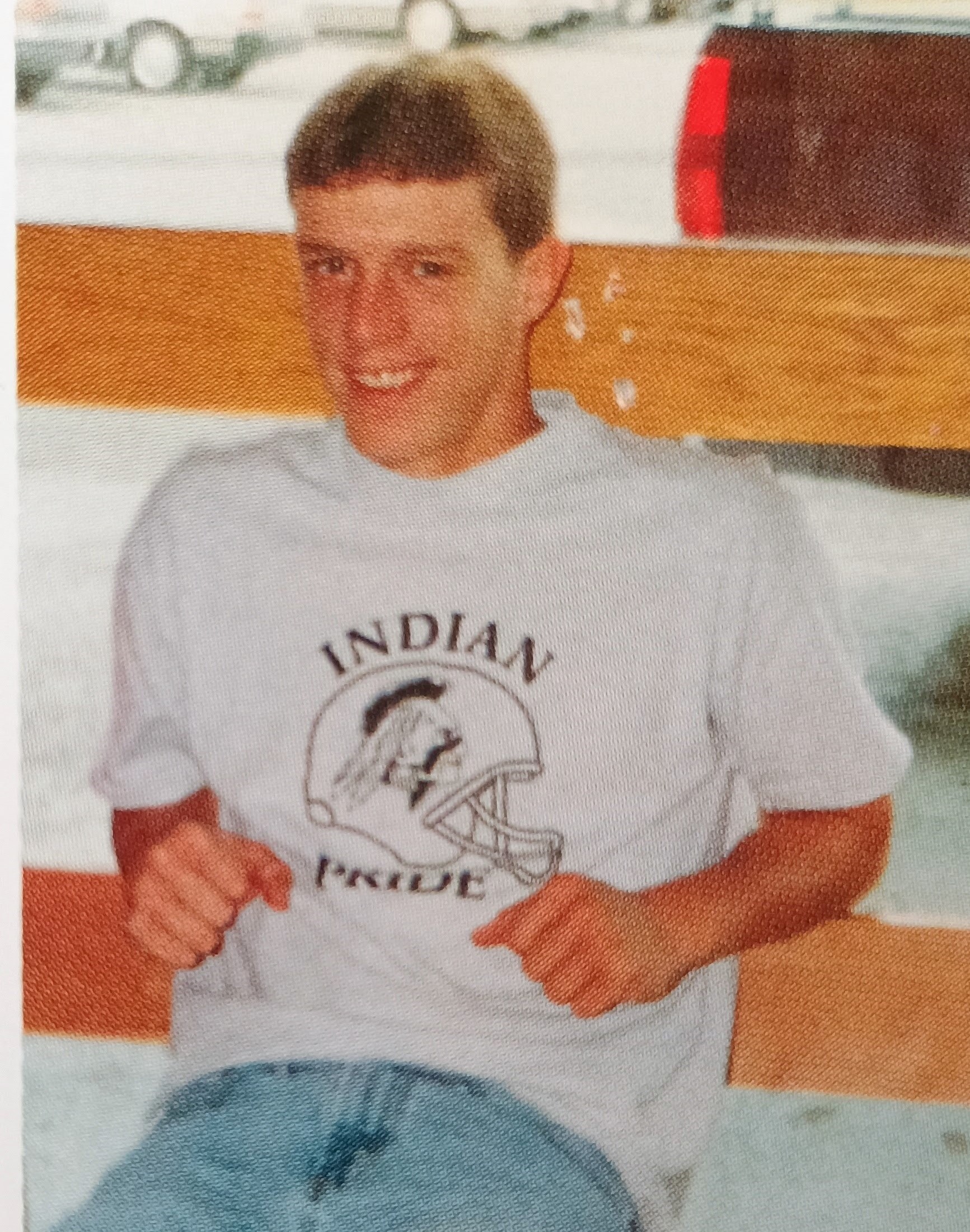
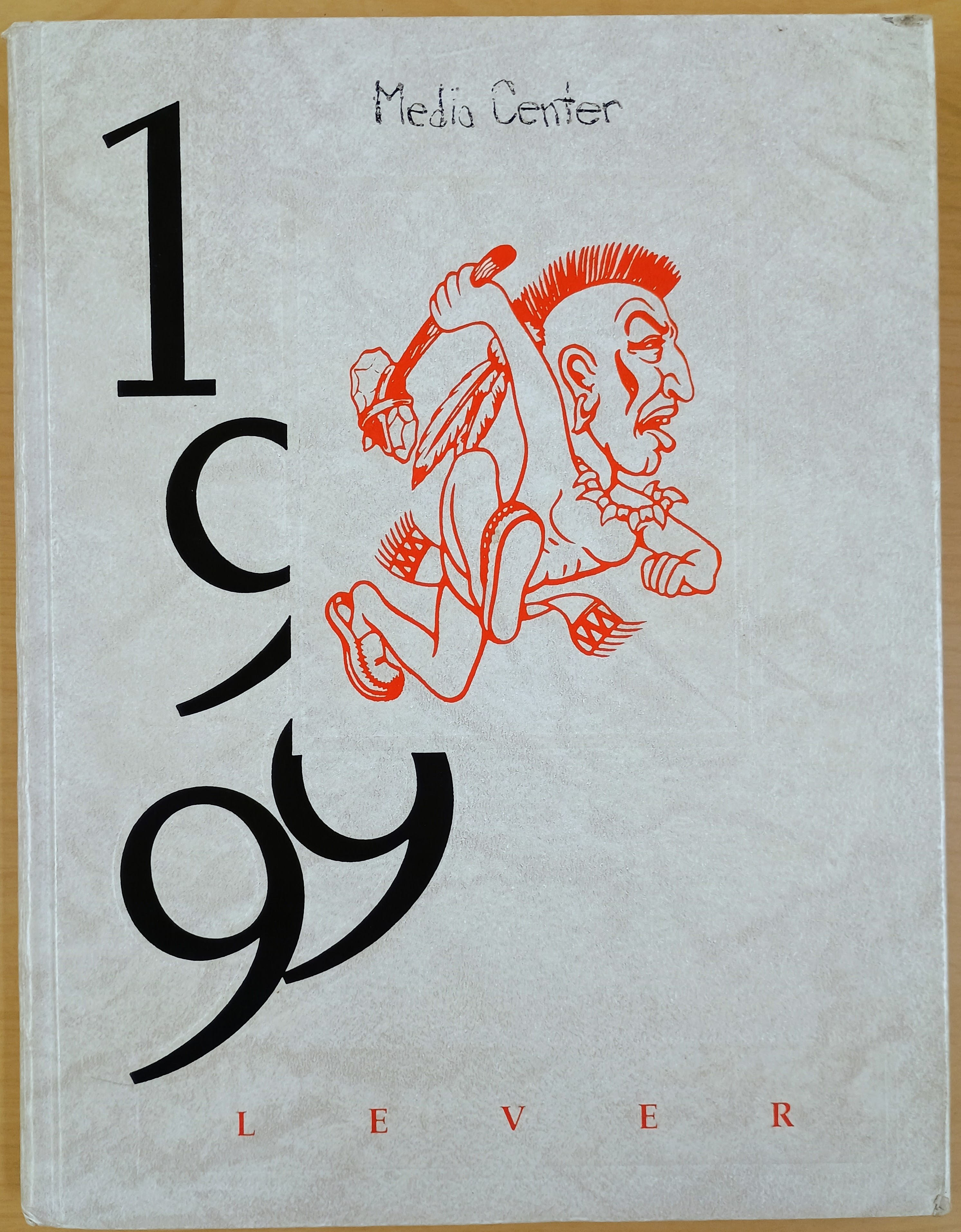
The mascot was used in many ways over the years. The name “Indians,” sometimes with a Native American head, was on t-shirts and sports gear. Students wore headdresses or “war paint” to games. Sports coverage talked about the Skowhegan team “scalping” their opponents, and cheer leaders used Indigenous stereotypes in their clothing, cheers, and dances.
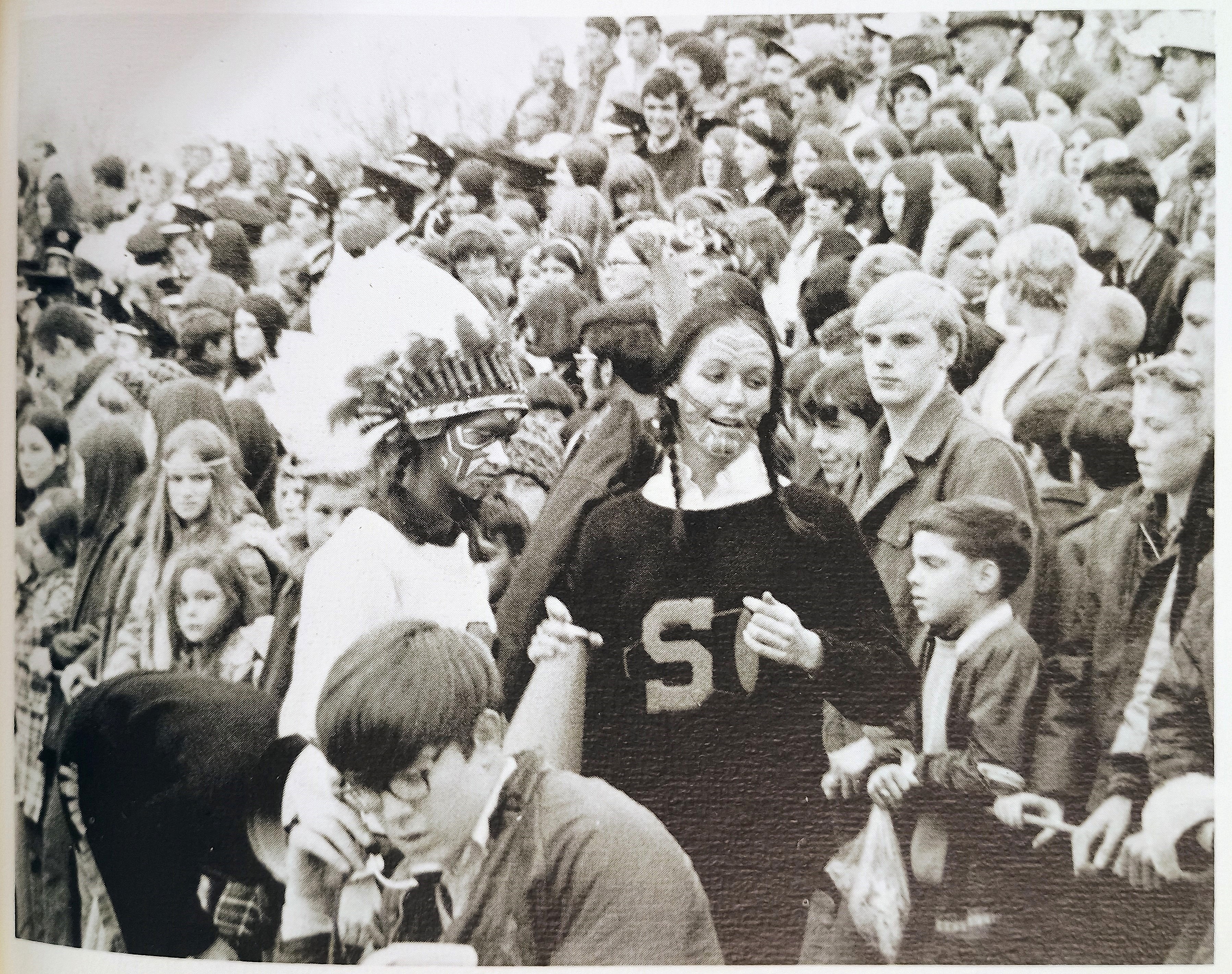
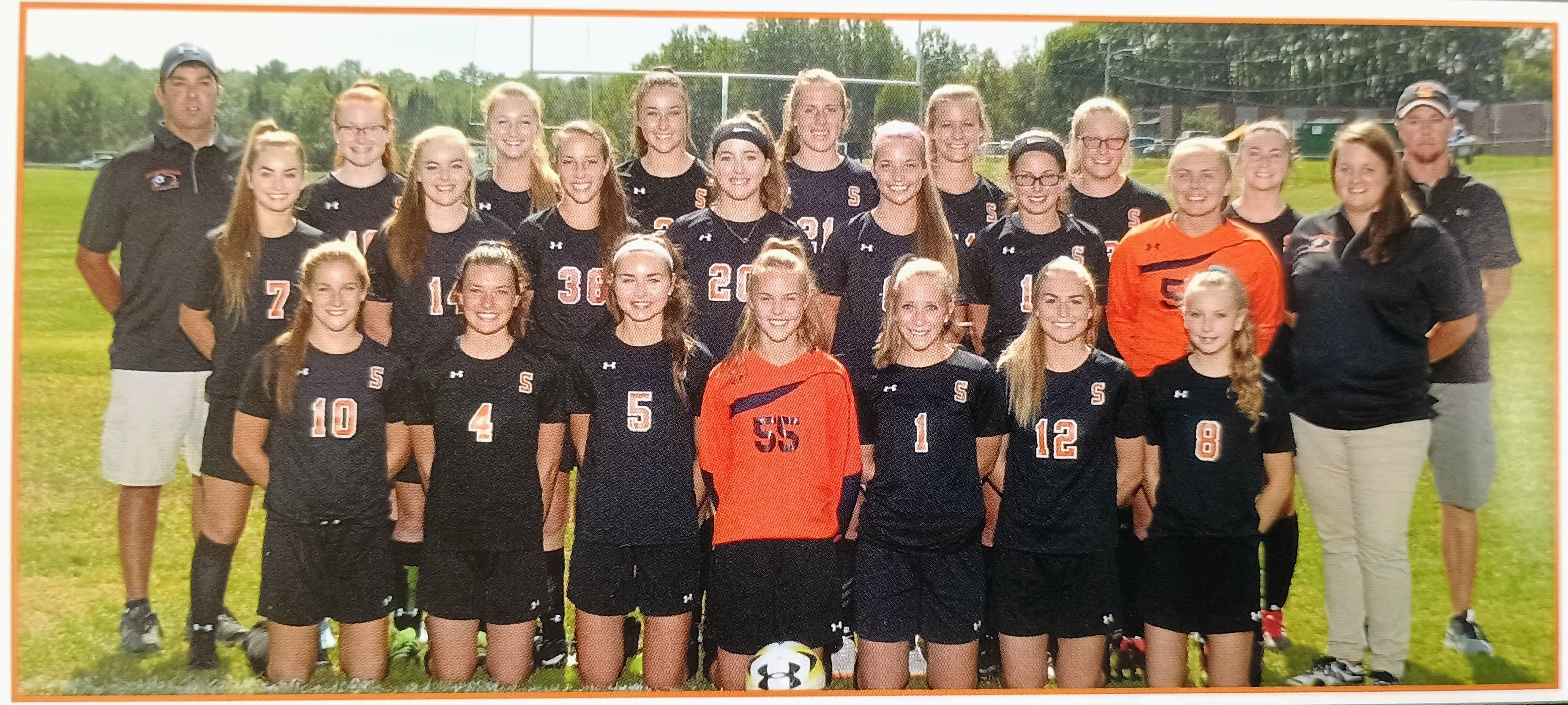
Over the years, more people began to feel that the mascot was a problem. Wabanaki people live in the area, and their kids were in the school system. Many students grew more and more uncomfortable wearing clothing and uniforms with the stereotypical images and the name “Indians,” so eventually most team uniforms just said “Skowhegan.”
Enough people had an issue that in 2015 the SAD School Board was asked to vote on whether to change the name. They voted to keep it. The board felt that the district had already gotten rid of the feathers, warpaint, and characters, so the name wasn’t a problem.
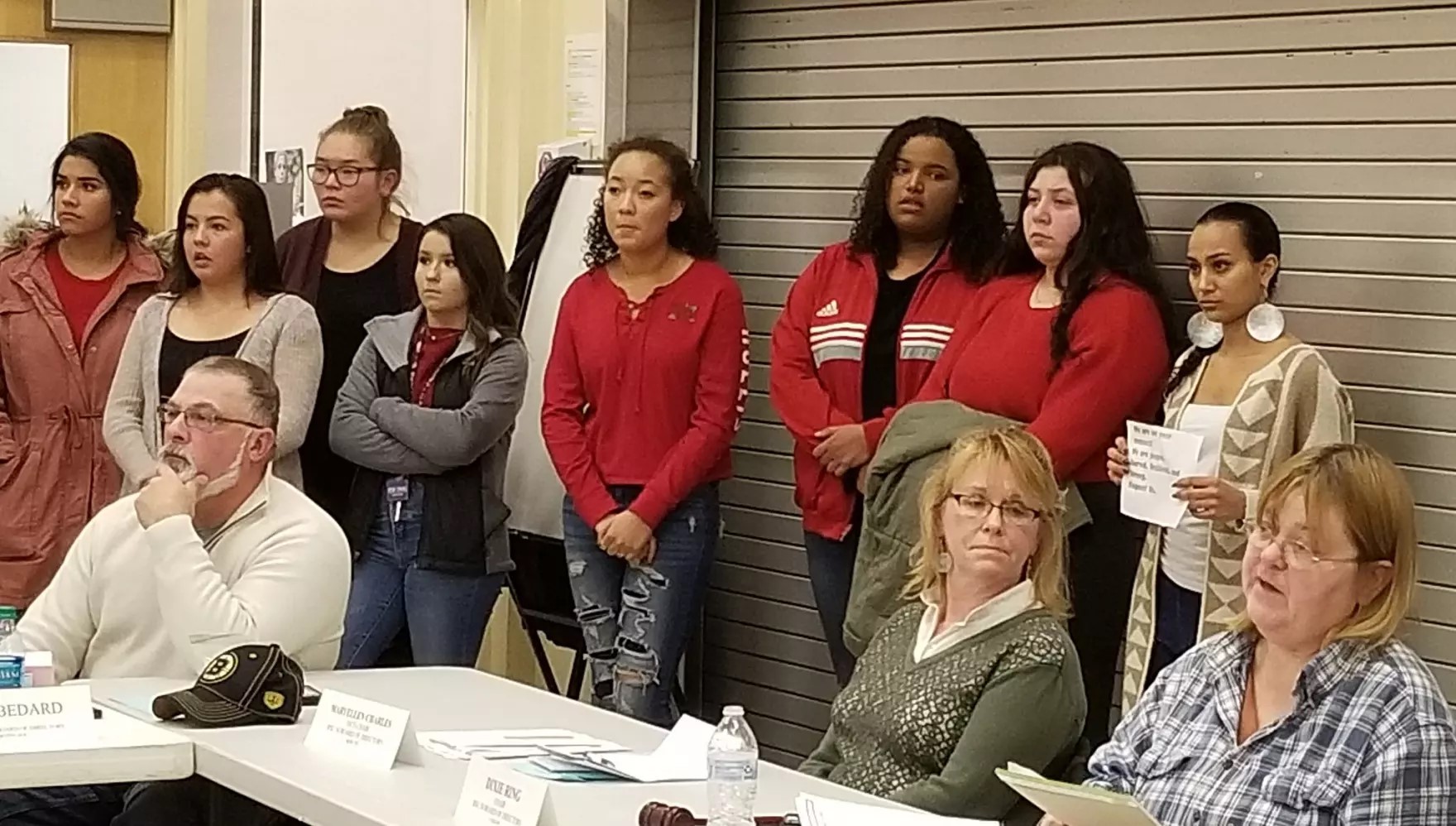
The decision bothered the people who felt the name itself was still racist and demeaning. They decided they needed to take action. They attended meetings, wrote editorials in the newspaper, and shared their opinions on social media.
Wabanaki leaders and students worked hard to advocate for change, even when it made them the targets of hate speech online and in person.
There was enough local activism to change the school board’s mind. In March 2019, they voted to get rid of the name. Skowhegan Area High School now has a new logo and they are called the River Hawks.
Who wanted to keep the mascots?
Lots of people wanted their mascots to stay the same. They felt like outsiders were forcing their values on the local community – telling them what they can or can’t say. Many graduates of Skowhegan’s schools felt personal connections to the name, and did not see the name as disrespectful. They thought it was a way to honor and remember the town’s Indigenous history.
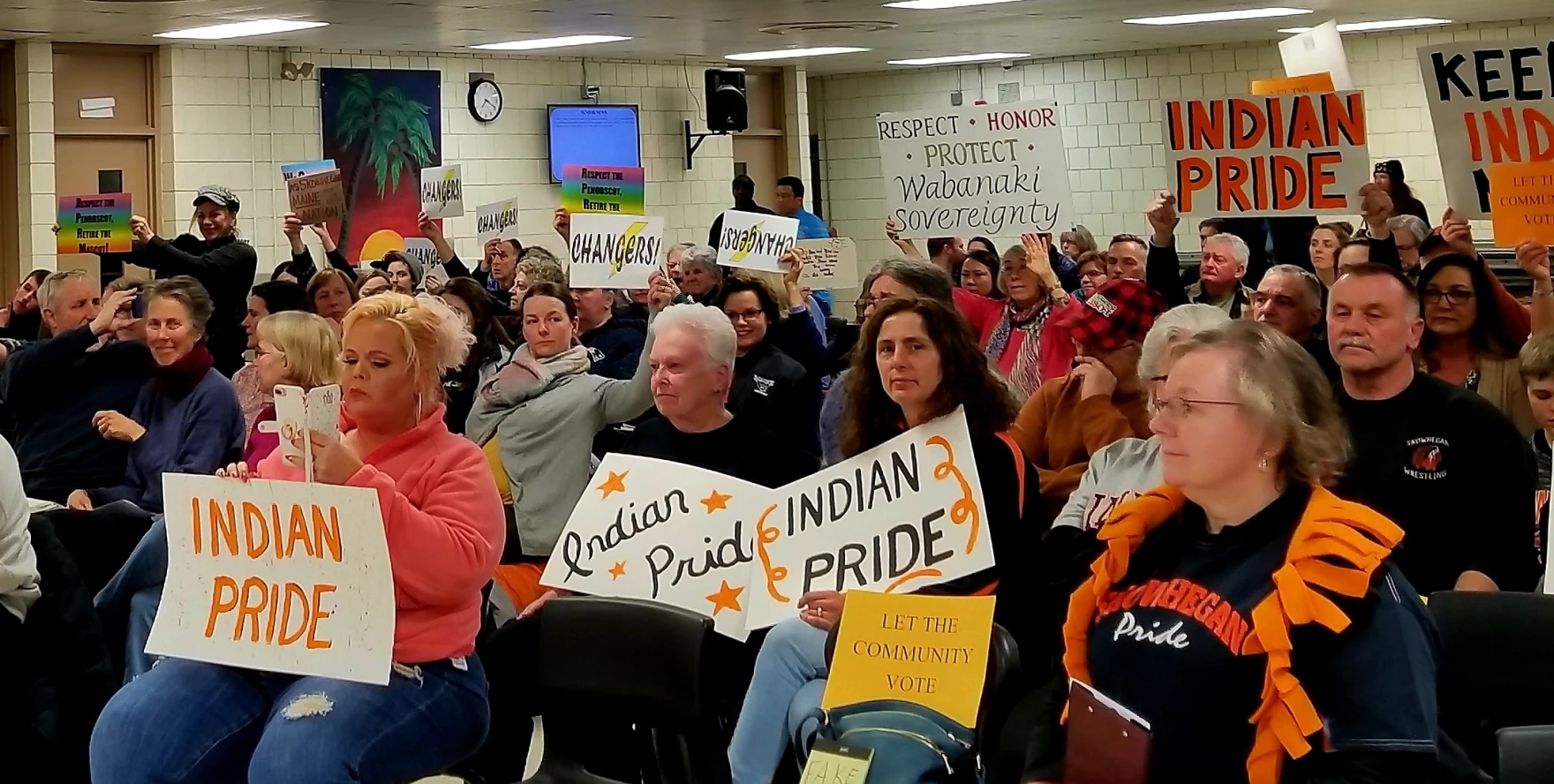
People connect their school mascots to all of their happy childhood memories, the values they learn from teachers and coaches, and the bonds they share with friends and teammates. They’re proud of where they come from and their town’s identity.
Change can be really hard, and it’s not always good. People on both sides were extremely passionate about this issue. They fought hard for what they believed in.
Why were Native mascots banned in Maine schools?
For decades, Indigenous community members, leaders, and activists worked hard to convince people that Native mascots were harming their children and communities. Mascots often showed a very stereotypical, negative version of Native people – and those ideas sank in. They were part of a broader culture that often dismissed Native people as inferior and uncivilized.
In 2005, the American Psychological Association called for “the immediate retirement of all American Indian mascots, symbols, images and personalities by schools, colleges, universities, athletic teams and organizations.” Social science studies showed that racial stereotypes, particularly American Indian sports mascots, had a direct, harmful impact on the “social identity development and self-esteem of American Indian young people.” Research showed two main negative effects on both Native and non-Native students:
- “Undermining the educational experiences of members of all communities-especially those who have had little or no contact with indigenous peoples. The symbols, images and mascots teach non-Indian children that it’s acceptable to participate in culturally abusive behavior and perpetuate inaccurate misconceptions about American Indian culture.
Establishes an unwelcome and often times hostile learning environment for American Indian students that affirms negative images/stereotypes that are promoted in mainstream society.” – American Psychological Association
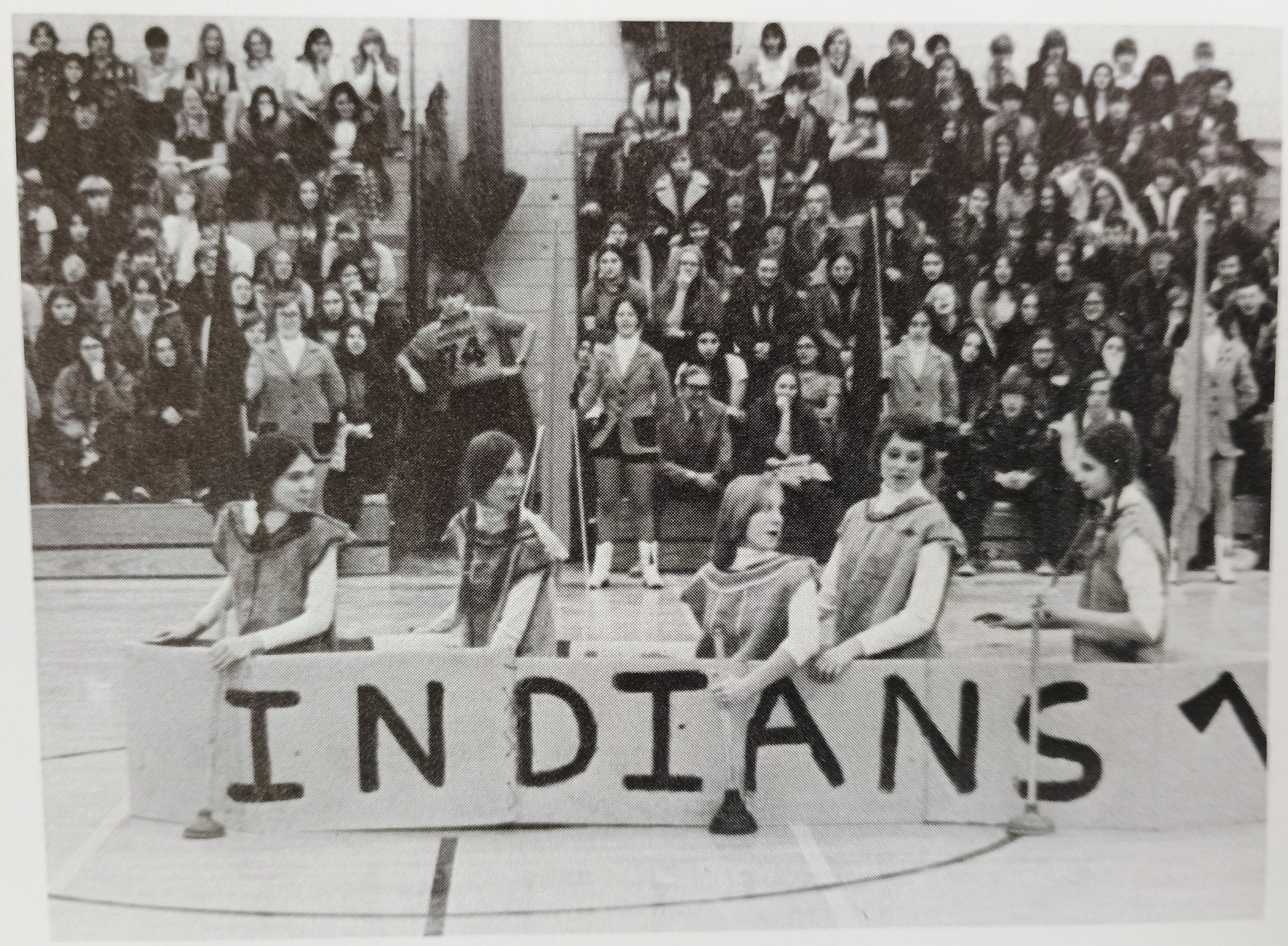
Many Maine schools decided to voluntarily change their mascots over the years. When they voted to change their name in March 2019, Skowhegan was the last school in the state with a Native mascot.
In May 2019, the Maine Legislature banned Native American mascots in all Maine public schools.
“While Indian mascots were often originally chosen to recognize and honor a school’s unique connection to Native American communities in Maine, we have heard clearly and unequivocally from Maine tribes that they are a source of pain and anguish. A mascot is a symbol of pride, but it is not the source of pride. Our people, communities, and understanding and respect for one another are Maine’s source of pride and it is time our symbols reflect that.” – Governor Janet Mills
People across the state and across the country followed the story of Skowhegan High School and the eventual statewide ban. Maine was the first state in the whole country to ban Native mascots.
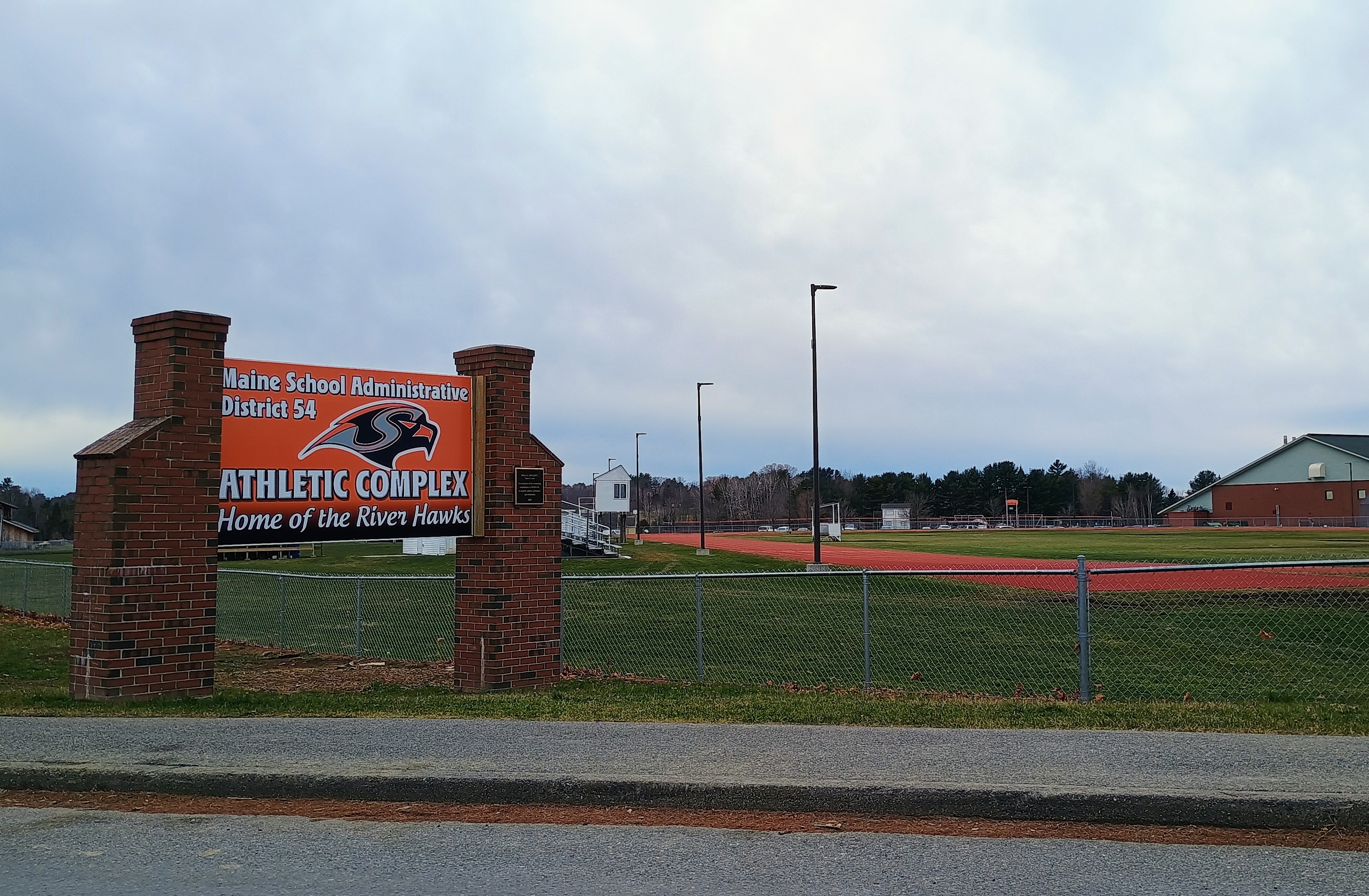
Sources:
- APA resolution
- Maine.gov
- Maine Public
- Fighting Indians documentary
- Lever Yearbooks, Skowhegan Area High School Library
The Lesson:
- Present as much of the introductory information below as desired to your students to give them context for the lesson. Depending on reading level, they could read the introduction as a homework assignment, or you could go over it together as a class.
- Students choose (or the teacher assigns) one or more of the primary sources to work with.
- The primary source can be projected/viewed on a big screen by the full class, or printed, so each student has their own copy.
- This is a mystery-solving activity – students should not know details about the sources in advance. Without first seeing the source label information, students practice their observation and analysis skills. They only see the source and have to use their skills to pull out information about it.
- Option 1 – Open inquiry
- The teacher leads a full-class discussion using the prompts “What do you see?” and “What do you wonder?” The class should be encouraged to look at tiny details and pull out clues from each source. This can also work as a whiteboard or post-it note activity, with students writing their own comments in response to the sources.
- Option 2 – Guided worksheets
- Students complete an Analysis Worksheet for each source. They can make educated guesses using whatever information they find in the sources. Note – This can be completed as a class, individually, or in small groups.
- Option 1 – Open inquiry
- Present the source label information (the “answers”) to the students. Were you surprised by anything you learned? Have you found more connections between the different sources?
- Repeat with as many sources as desired.
- Discuss all the sources together. What sources did you work with? What did you learn from them? What questions do you have? How do the different sources connect to the theme or to each other?
- Optional: Use the recommended activity prompts and reflection questions for further discussion.
Reflection Questions:
- How did different people in Skowhegan end up viewing the mascot so differently?
- Are people in the video clips making arguments that sound similar to debates going on today? If so, what are some examples?
- Why is this issue important to Wabanaki people?
- How is a mascot debate in 2019 connected to the rest of Wabanaki history?
- What are some ways that people in Skowhegan used their voice?
- How can people participate in local government?
- Do you think that a similar debate could have happened in your town? Why or why not?
Optional Activities:
#1 Movie Screening – watch the documentary “Fighting Indians.” for more context on this story, including footage from other town meetings and interviews with the people who were involved. It has an accompanying educational resource guide.
Note – it is currently (as of 2025) available for free on the app Kanopy, which may be available for free through your local library. It might be possible to get Kanopy on an iPad and then cast it to a smart TV.
If you can’t see the whole movie, there are educational clips at this website: https://mainepublic.pbslearningmedia.org/resource/challenging-native-themed-mascots-video/challenging-dominant-historical-narratives-mascot-debate/
#2 Cheerleading Deep Dive – Encourage students to look through this grouping of images of Skowhegan cheer leaders over the years.
Link to image folder: https://drive.google.com/drive/folders/1obzQ2epntdNi7cuyX4f0QJfWbF_JhApo?usp=drive_link
Discussion prompts:
- What details do you notice?
- How can clothing and accessories share a message?
- What symbols do you see?
- Do you see evidence of change over time?
#3 Town Meeting – hold a town meeting on the topic of Native mascots and give everyone two minutes to testify out loud to the rest of the class.
Variation 1: Each student writes their testimony based on their own beliefs.
Variation 2: Assign half the students pro-mascot, half anti-mascot and make them come up with arguments to support their position.
Option for either variation: Assign some students the role of the school board and let them vote on which side convinced them.
Using Your Voice Primary Source Sets developed in collaboration between the Maine State Archives, Maine State Library, and Maine State Museum.