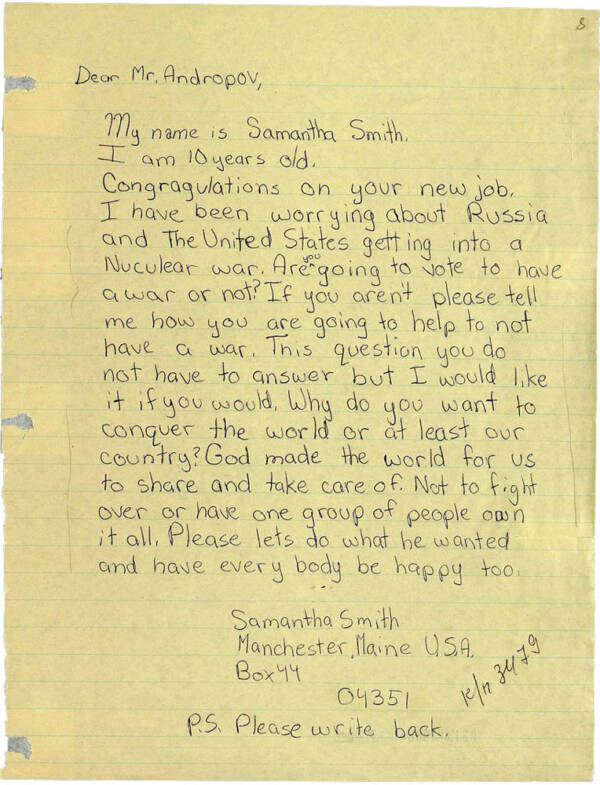
In November 1982, 10-year-old Samantha Smith, from Manchester, Maine, was worried about a possible war between the United States and the Soviet Union (called Russia today). Samantha had the idea of writing to the new Soviet leader, Yuri Andropov, to ask if his country wanted war. Months went by with no answer. Finally, Samantha received a call from the Soviet Embassy, saying Andropov’s letter was on its way. When the letter arrived, it would change Samantha and her family’s lives. It included an invitation for them to visit the Soviet Union and would make Samantha famous.
Dear Samantha!
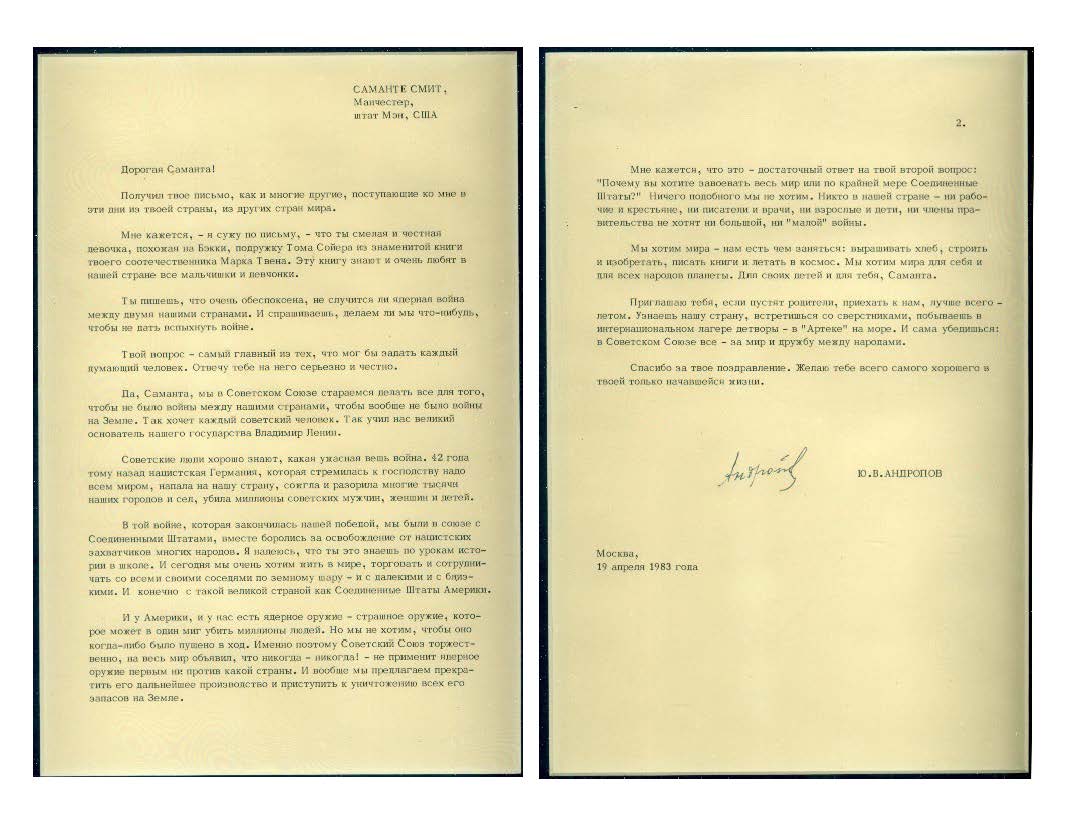
. . . You write that you are anxious about whether there will be a nuclear war between our two countries. And you ask are we doing anything so that war will not break out. . .
Yes, Samantha, we in the Soviet Union are trying to do everything so that there will not be war between our countries, so that in general there will not be war on earth. This is what every Soviet man wants. . . .
We want peace – there is something that we are occupied with: growing wheat, building and inventing, writing books and flying into space. We want peace for ourselves and for all peoples of the planet. For our children and for you, Samantha.
I invite you, if your parents will let you, to come to our country, the best time being the summer. You will find out about our country, meet with your contemporaries, visit an international children’s camp – “Artek” – on the sea. And see for yourself: in the Soviet Union – everyone is for peace and friendship among peoples.
Thank you for your letter. I wish you all the best in your young life.
Y. Andropov
Source 2 - Document
Source 2 - Image
Excerpt of Yuri Andropov’s Letter to Samantha Smith
April 19, 1983
Maine State Museum Collection, 2010.37.206
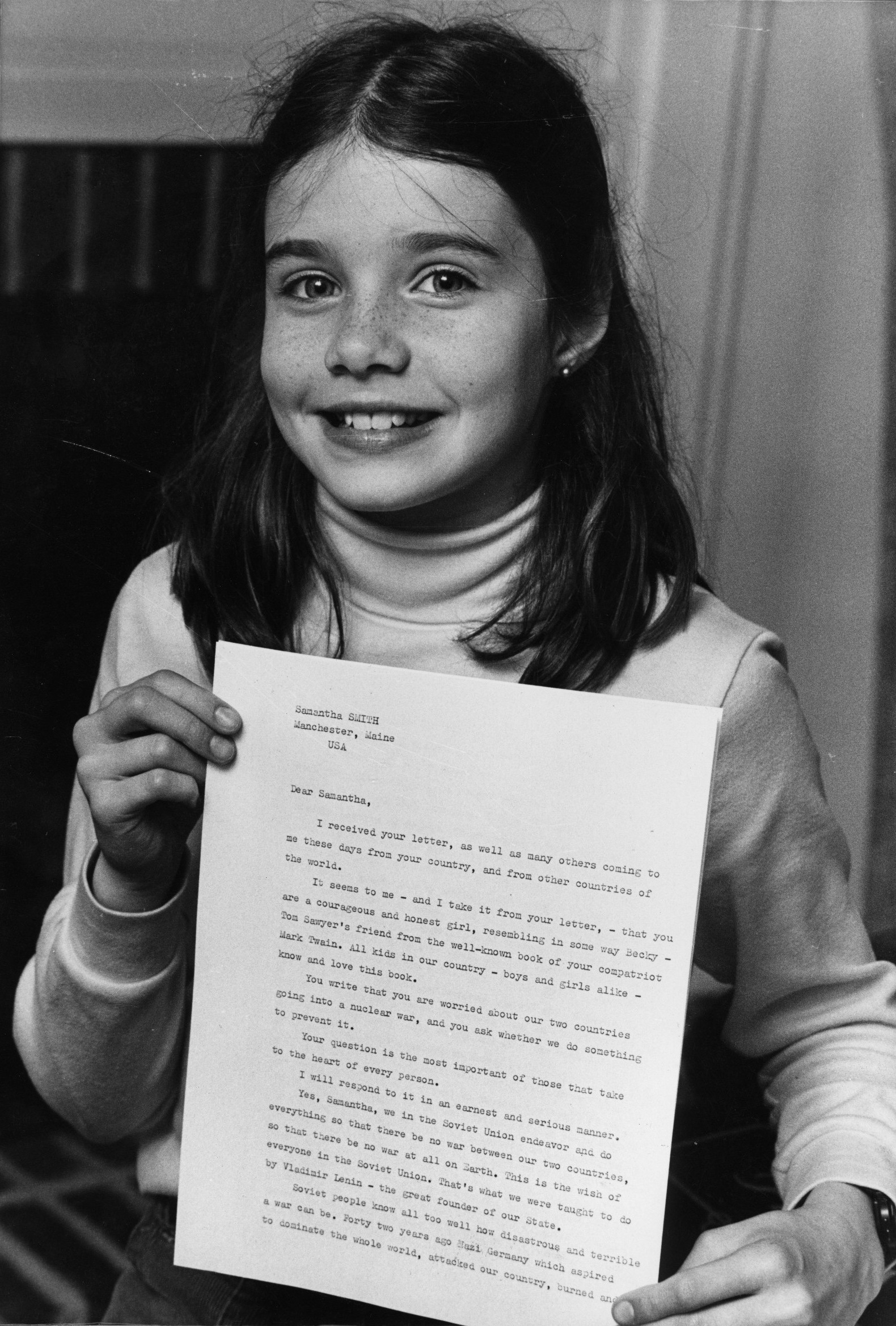
In 1982, ten-year-old Samantha Smith of Manchester, Maine, wrote a letter to the leader of the Soviet Union (called Russia today), Yuri Andropov, asking whether he wanted a nuclear war between the Soviet Union and the United States. This letter is his response. In the letter, Andropov states his country’s desire for peace and invites Samantha and her family to visit the Soviet Union.
Both letters were big news stories! Reporters around the world wanted to speak with Samantha about why she wrote the letter and what she thought of the Soviet leader’s response.
Source 3 - Artifact
Source 3 - Artifact
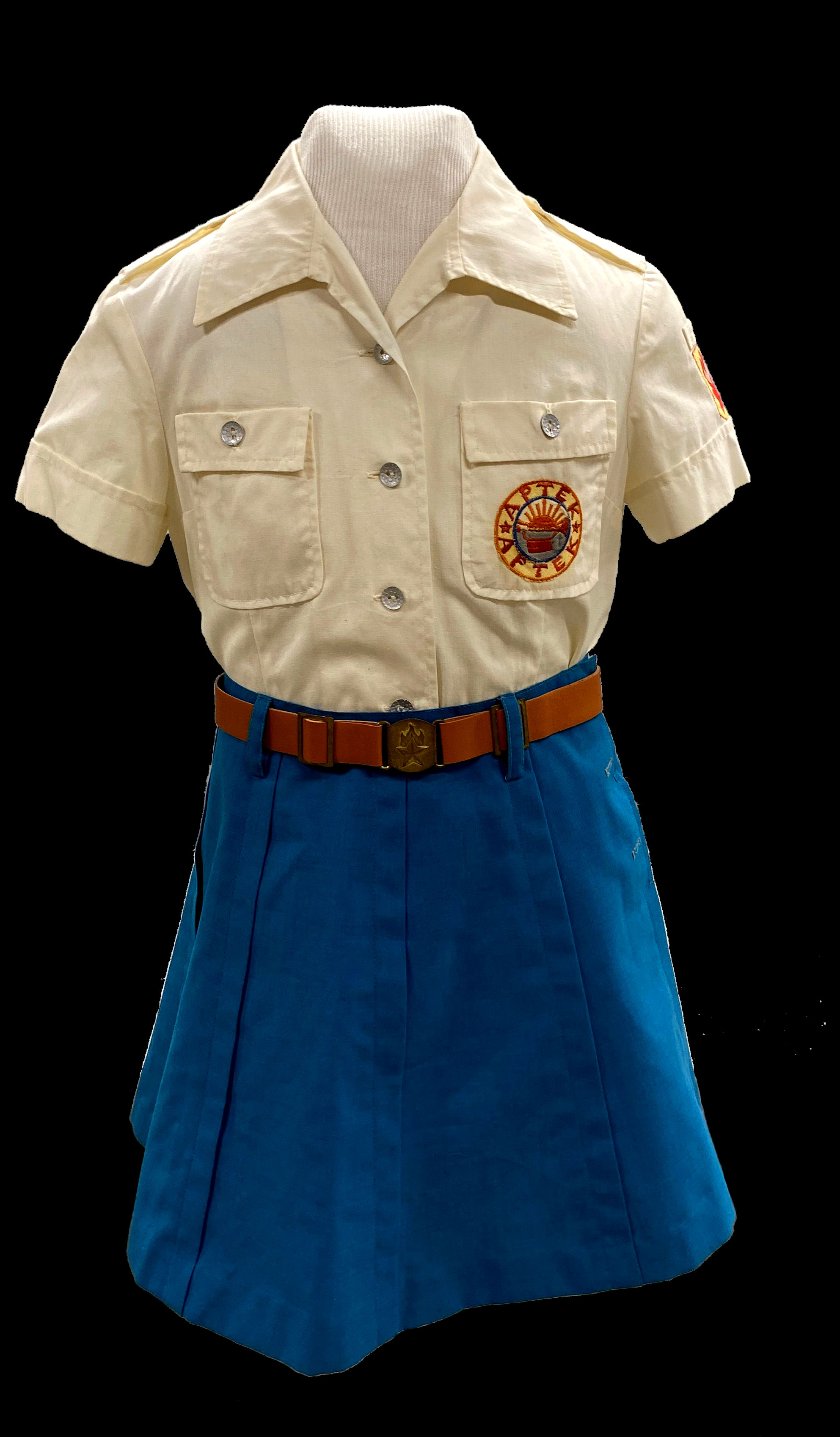
Artek Camp Uniform worn by Samantha Smith
1983
Maine State Museum Collection, 2010.37.207.1-.4
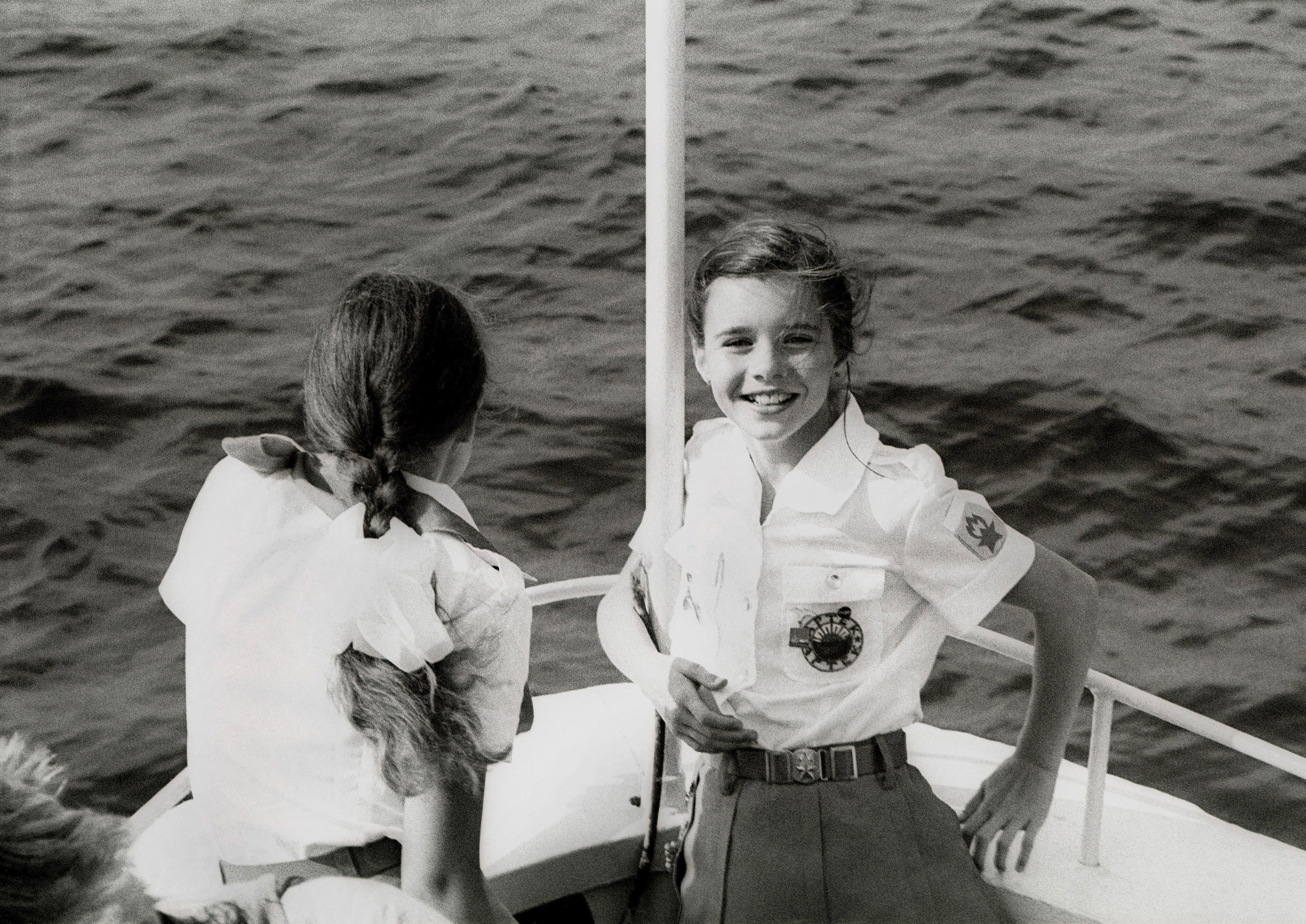
In Yuri Andropov’s letter to Samantha Smith, he invited Samantha and her family to visit the Soviet Union (now called Russia) and suggested they visit in July. During their trip, they spent some time at the Artek Pioneer Camp in Crimea. The Young Pioneers are a little like Boy Scouts or Girl Scouts, except their activities teach them about communism instead of democracy.
Artek was the most famous summer camp in the Soviet Union. It had 150 buildings, including a space museum and a film studio named Artekfilm. Only the best students and strongest athletes were invited to attend.
While visiting the camps, Samantha wore an Artek Pioneer uniform like the
other children, but she didn’t wear a red scarf, so everyone knew she was a guest. While she was at the camp, Samantha swam, learned Russian songs and dances, and made lots of new friends
Source 4 - Image
Source 4 - Image
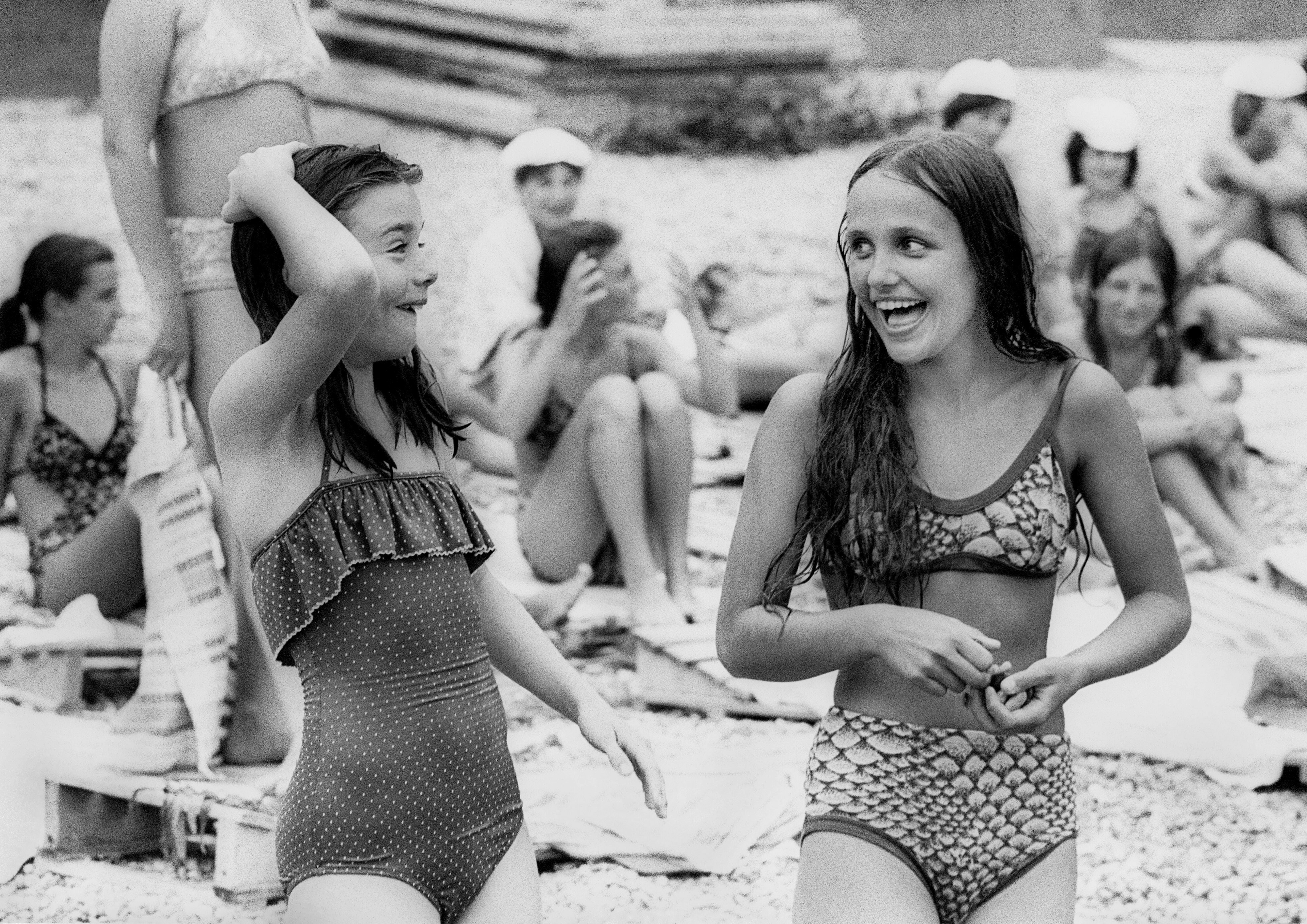
Photo of Samantha Smith and Natasha Kashirina at Artek During a Swimming Competition
July 1983
Photograph by Vladimir Mashatin
Samantha Smith spent four days at Artek Pioneer Camp in Crimea. The Young Pioneers are a little like Boy Scouts or Girl Scouts, except their activities teach them about communism instead of democracy. Just like a summer camp in Maine, Samantha and her new Soviet friends took hikes in the nearby woods, sang songs, played games, and went swimming.
Natasha Kashirina and Samantha became good friends and exchanged letters after Samantha returned to the United States. Natasha Kashirina’s mother was an English teacher in Leningrad (now known as St. Petersburg), and Natasha attended a special English school, where she had been studying English since the second grade. While at Artek, Samantha stayed in Natasha’s dorm, where many of the campers could speak some English.
Vladimer Mashatins was a photographer for a Soviet children’s newspaper called Pionerskaya Pravda (Pioneer’s Truth). He was one of a few reporters allowed to take pictures of Samantha’s visit to Artek.
Source 5 - Image
Source 5 - Image
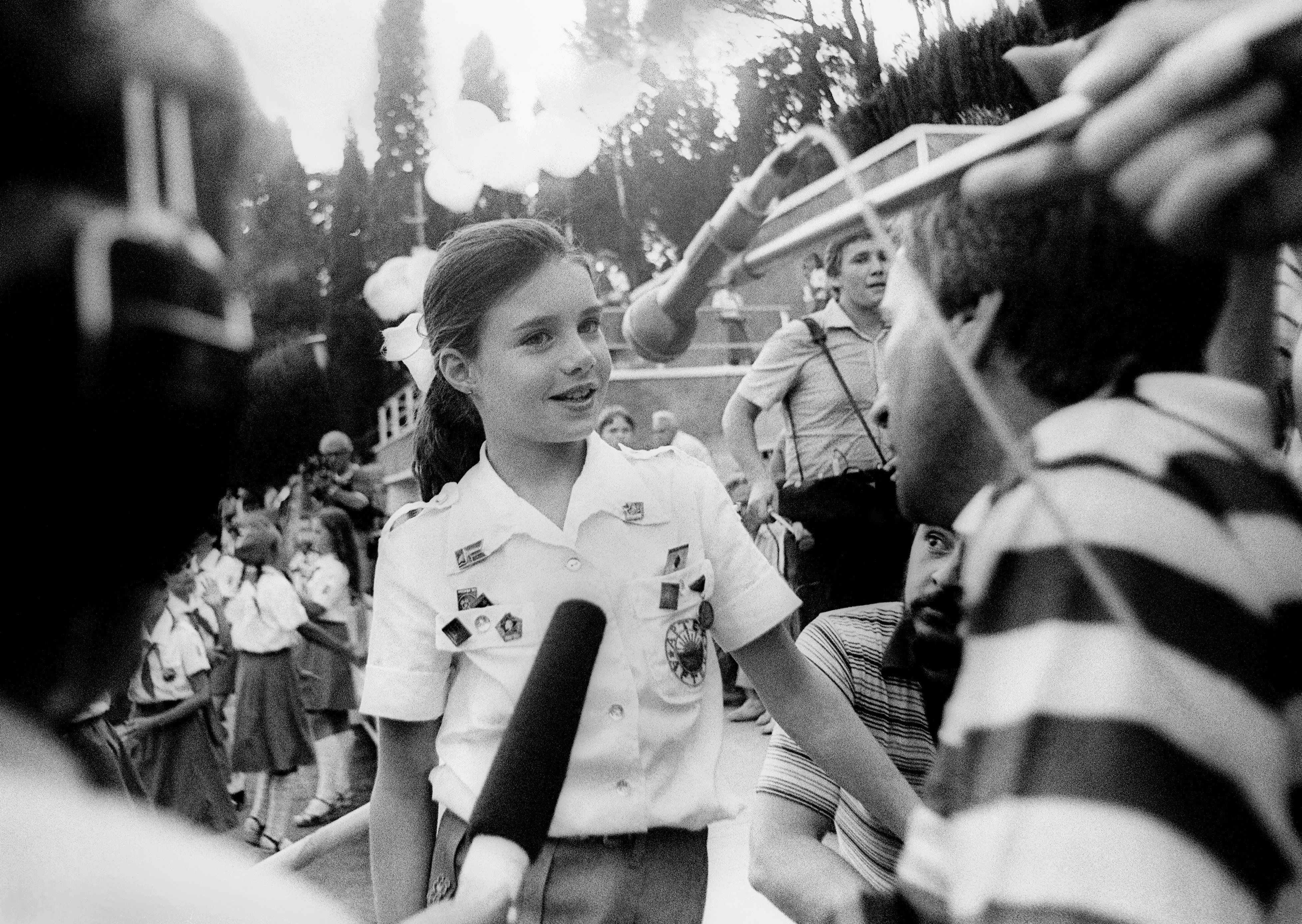
Photo of Samantha Smith talking to the press in her Artek Uniform
July 1983
Photograph by Vladimir Mashatin
Reporters from around the world followed Samantha and her family to Crimea, where she visited the famous Soviet summer camp, Artek. Samatha’s father, Arthur Smith, asked that she be allowed to have fun with other campers and not be followed by photographers all the time.
For the most part, the reporters and photographers kept their distance. One exception was at a meet-and-greet event with campers from different camps who had questions for Samantha about life in the United States.
Reporters at the event quickly took over and asked their own questions about how Samantha liked Artek and about her visit to Moscow.
Using Your Voice Primary Source Sets developed in collaboration between the Maine State Archives, Maine State Library, and Maine State Museum.

 In 1982, ten-year-old Samantha Smith of Manchester, Maine, wrote a letter to the leader of the Soviet Union (called Russia today), Yuri Andropov, asking whether he wanted a nuclear war between the Soviet Union and the United States. This letter is his response. In the letter, Andropov states his country’s desire for peace and invites Samantha and her family to visit the Soviet Union.