
Using Your Voice: Samantha Smith
Voice and Democracy
In a democracy, people have a say in how their country is run. They can help choose their leaders by voting in elections. The leaders they choose make decisions for everyone.
Democracies protect important rights. In the United States, the First Amendment says that everyone has the right to speak, share their ideas, and be heard. This freedom of speech is important because it helps people work together to solve problems.
While not everyone can vote (like kids who have to wait until they are 18), everyone has a voice! You can share your opinions and ask for changes even if you can’t vote yet. Citizens (both kids and adults) can express their thoughts at public meetings, join protests, or talk with their elected leaders.
It’s also very important to listen to and respect others who may have different ideas or ways of living. This helps make Maine and the United States welcoming places for everyone. When we can talk and share our opinions peacefully, we can create positive change together!
Who was Samantha Smith?
Summary: In this lesson, you will look at primary sources that show how a 10-year-old Maine girl used her voice to advocate for peace between the United States and the Soviet Union.
Share whatever information from this introduction you feel will help provide context for your students before they investigate the primary sources.
America’s Youngest Ambassador
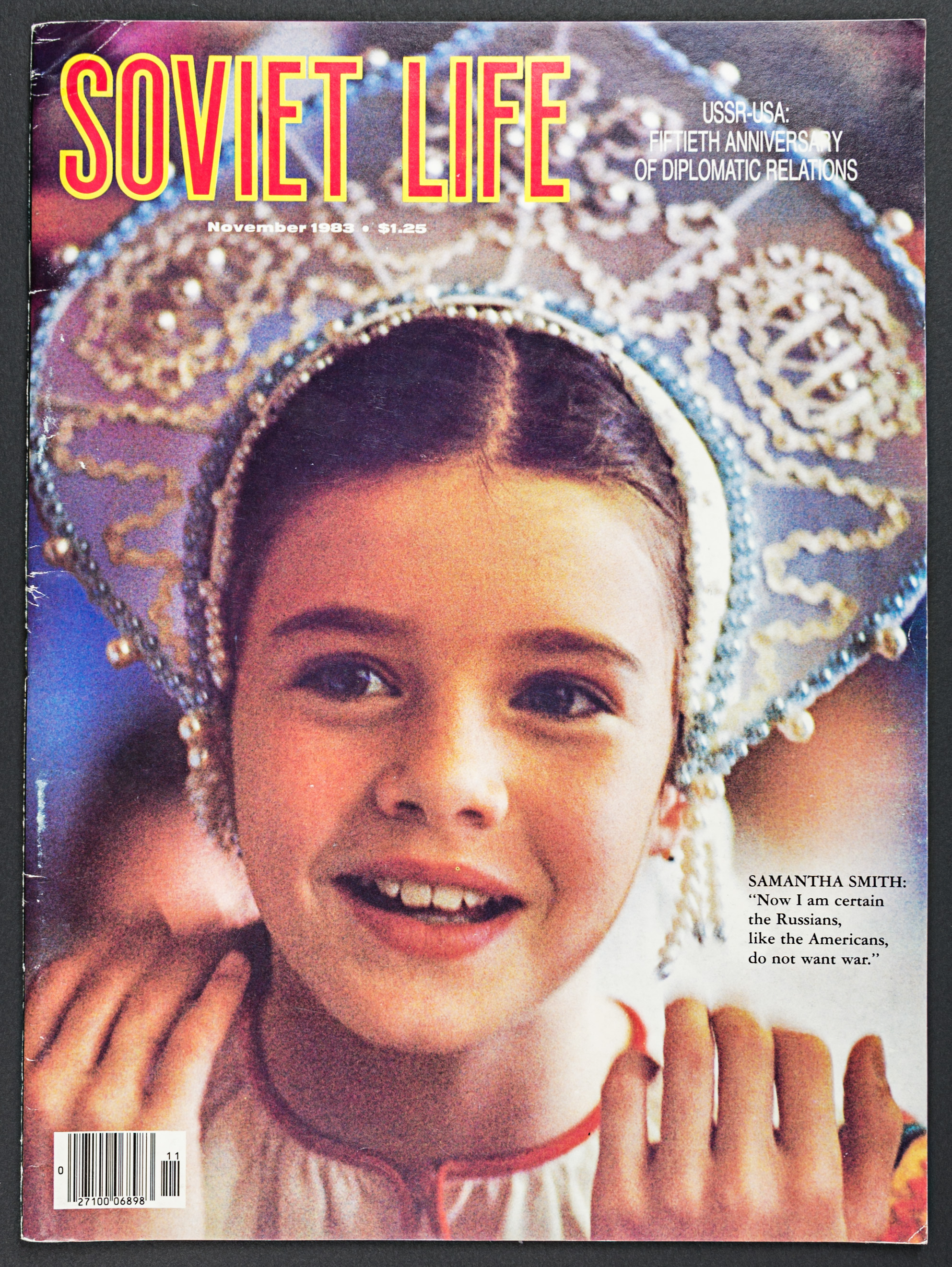
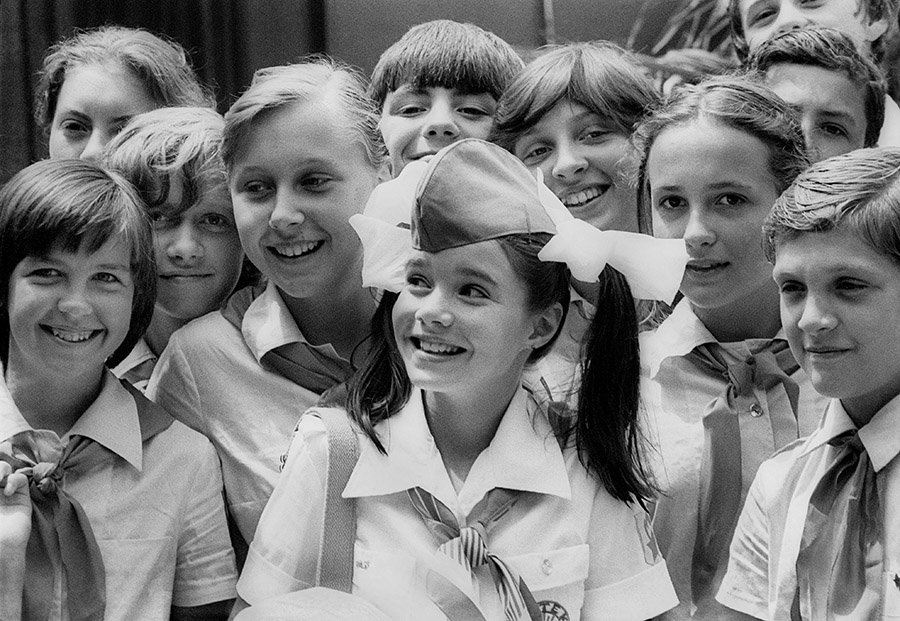
In 1982, at age 10, Samantha Smith of Manchester, Maine, sent a letter to Yuri Andropov, the leader of the Soviet Union (now known as Russia). She asked him why he wanted “to conquer the world or at least our country.” Andropov answered Samantha’s letter, telling her he didn’t want to go to war and that the Soviets only wanted peace. Andropov invited Samantha and her parents to visit the Soviet Union that summer.
The Smith family toured the Soviet Union for two weeks in July 1983. She visited Moscow and Leningrad (now known as St. Petersburg), and joined Soviet children at Artek, a camp for children, where she spent her time swimming, learning Russian songs and dances, and making many friends.
Soviet TV stations and newspapers reported every detail of her trip. Images of her journey were also published in the United States. Soon, the press gave Samantha the title “America’s goodwill ambassador.”
Tragically, in 1985, at the age of 13, Samantha and her father were killed in a plane crash as the plane attempted to land at Maine’s Lewiston-Auburn Regional Airport.
Additional Information: The Cold War 1945-1991
After World War II, the United States and the Soviet Union became the two strongest countries in the world. These countries were often called superpowers. They became rivals and worked to stop each other from gaining too much power.
This time of tension is known as the Cold War. Although they never fought each other directly, this rivalry led to other conflicts, like the Korean War in the 1950s and the Vietnam War in the 1960s. After World War II, the Soviet Union forced its type of communist government on the surrounding countries under its control. The United States did not want communism to spread to other countries.
Both nations built atomic weapons, leading to a race to create more powerful and destructive weapons. In the 1970s, the United States and the Soviet Union signed agreements to limit the number of nuclear weapons they each had. Things began to change in the Soviet Union when Mikhail Gorbachev became the leader in 1985. He tried to improve the economy and encourage open discussions, a policy known as “glasnost.” By 1991, the Soviet Union had broken apart, and the Cold War came to an end.
Cold War Resources:
https://www.loc.gov/classroom-materials/cold-war/
https://www.cfr.org/timeline/us-russia-nuclear-arms-control
https://historyforkids.org/the-cold-war/
https://titanmissilemuseum.org/about/cold-war-timeline/
The Lesson:
- Present as much of the introductory information below as desired to your students to give them context for the lesson. Depending on reading level, they could read the introduction as a homework assignment, or you could go over it together as a class.
- Students choose (or the teacher assigns) one or more of the primary sources to work with.
- The primary source can be projected/viewed on a big screen by the full class, or printed, so each student has their own copy.
- This is a mystery-solving activity – students should not know details about the sources in advance. Without first seeing the source label information, students practice their observation and analysis skills. They only see the source and have to use their skills to pull out information about it.
- Option 1 – Open inquiry
- The teacher leads a full-class discussion using the prompts “What do you see?” and “What do you wonder?” The class should be encouraged to look at tiny details and pull out clues from each source. This can also work as a whiteboard or post-it note activity, with students writing their own comments in response to the sources.
- Option 2 – Guided worksheets
- Students complete an Analysis Worksheet for each source. They can make educated guesses using whatever information they find in the sources. Note – This can be completed as a class, individually, or in small groups.
- Option 1 – Open inquiry
- Present the source label information (the “answers”) to the students. Were you surprised by anything you learned? Have you found more connections between the different sources?
- Repeat with as many sources as desired.
- Discuss all the sources together. What sources did you work with? What did you learn from them? What questions do you have? How do the different sources connect to the theme or to each other?
- Optional: Use the recommended activity prompts and reflection questions for further discussion.
Optional Activities:
Make a Friendship Peace Chain
Using 2-3-inch strips of different-colored construction paper, have everyone in the class create a link in the chain, adding it to other links to form one big chain. On each strip of paper, students will write “I am ________________. My friend is ________________. One good thing about my friend is __________________________.”
Make a Concept Map
Make a concept map for each term: rights, duties, and responsibilities. The teacher will need a way to make a large, class concept map (either on chart paper or on an interactive whiteboard). Teachers should draw three large bubbles/circles, one for each term: rights, duties, and responsibilities. As a class, ask learners to say what they know or think they know about each term. This is a great way to introduce these words and how they connect to civic engagement. Classes can add to the concept map throughout the lesson as their learning grows. Learners can also break into small groups to complete their own concept maps, depending on their age. When finished, they can share their work with the class and discuss it as a group.
Reflection Questions:
- What traits make a person a good ambassador? (or peacemaker)
- In what ways was Samantha Smith a good ambassador? What did she do?
- What did Samantha learn about people in the Soviet Union on her trip?
- Think of a cause that’s important to you. Could you write a letter to advocate for your cause to the president of a nation/governor/mayor/principal as Samantha did? Why or why not?
- Samantha lived more than 40 years ago. Do you think kids today are as engaged in world politics as Samantha was? Explain your thinking.
- Did Samantha’s letter make a difference to the cause of world peace? Explain why or why not
Using Your Voice Primary Source Sets developed in collaboration between the Maine State Archives, Maine State Library, and Maine State Museum.