This photo shows John Jenkins (center, standing) posing with two other instructors wearing gis (martial arts uniforms) and belts. They are holding weapons.
There is an audience of children sitting behind them, watching. Some of the kids are holding up a sign that says, “The John Jenkins Golden Fist Karate School.” You can see how Jenkins looked as an athlete, teacher, and leader when he was around 23 years old.
Jenkins began teaching martial arts in 1973, when he was still a student at Bates College. He was later recognized around the country and world for his skill, and is in the US International Black Belt Hall of Fame.
Jenkins used martial arts as a way to teach discipline, build relationships, and deal with adversity. Mastering an athletic skill can be a way to focus on your goals.
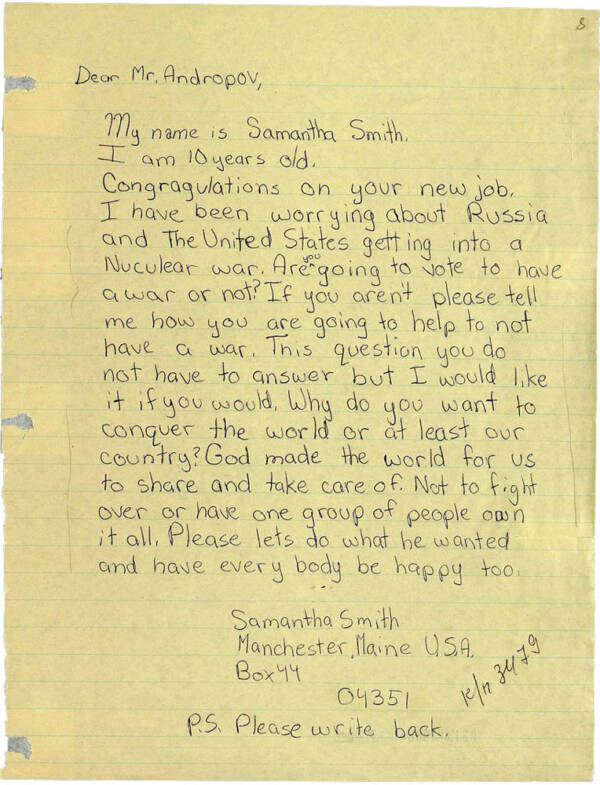
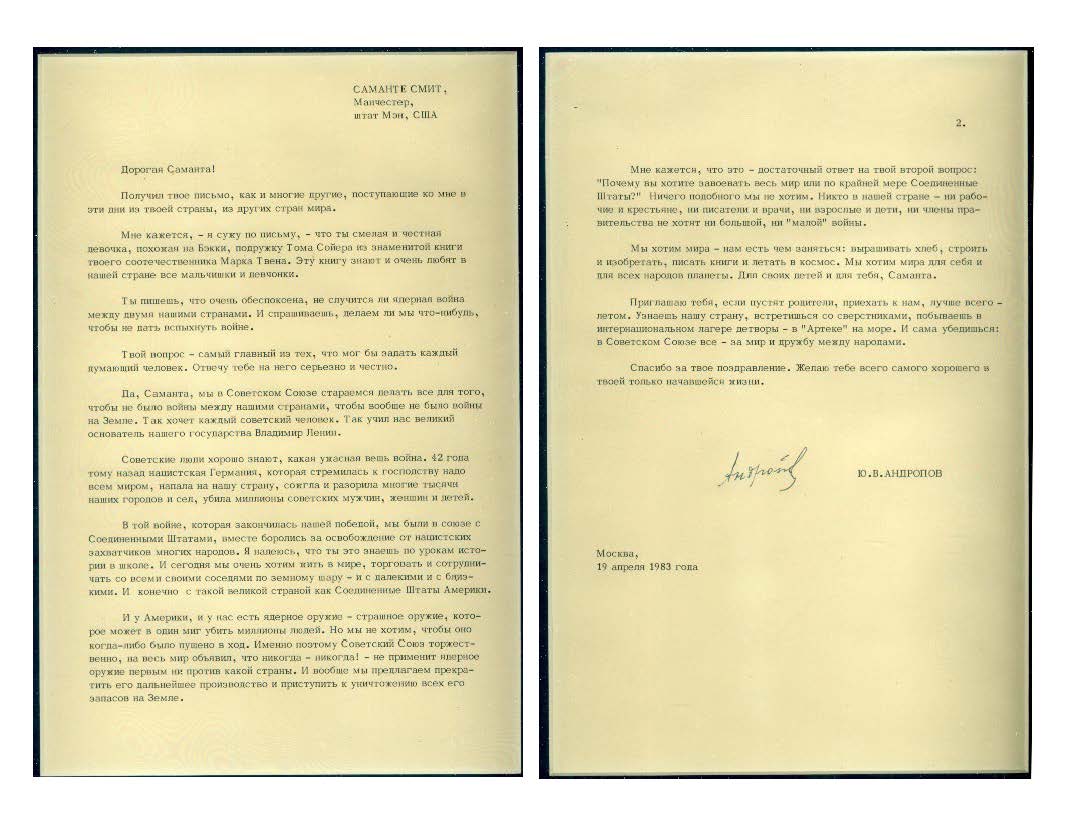
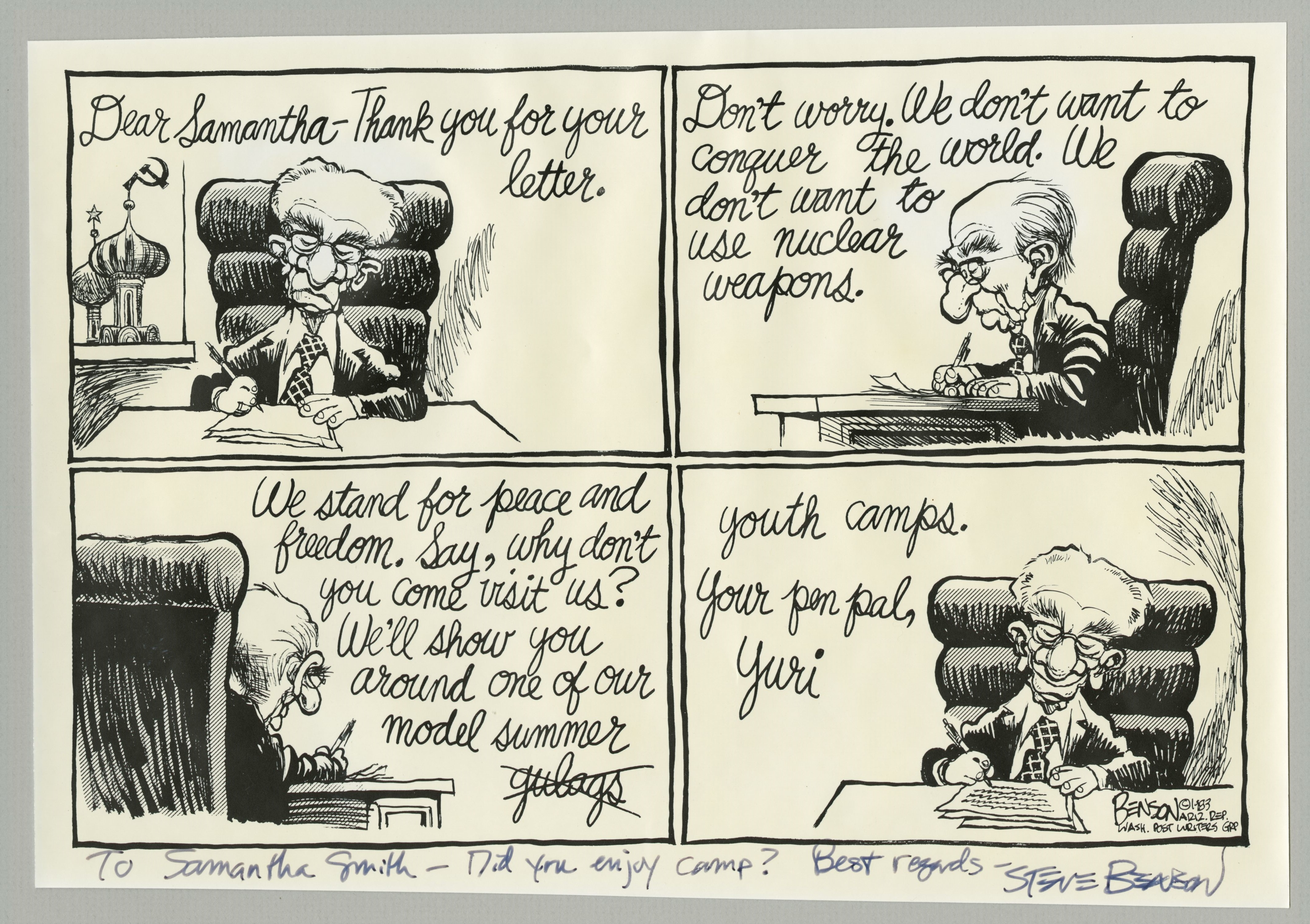
Dear Samantha!
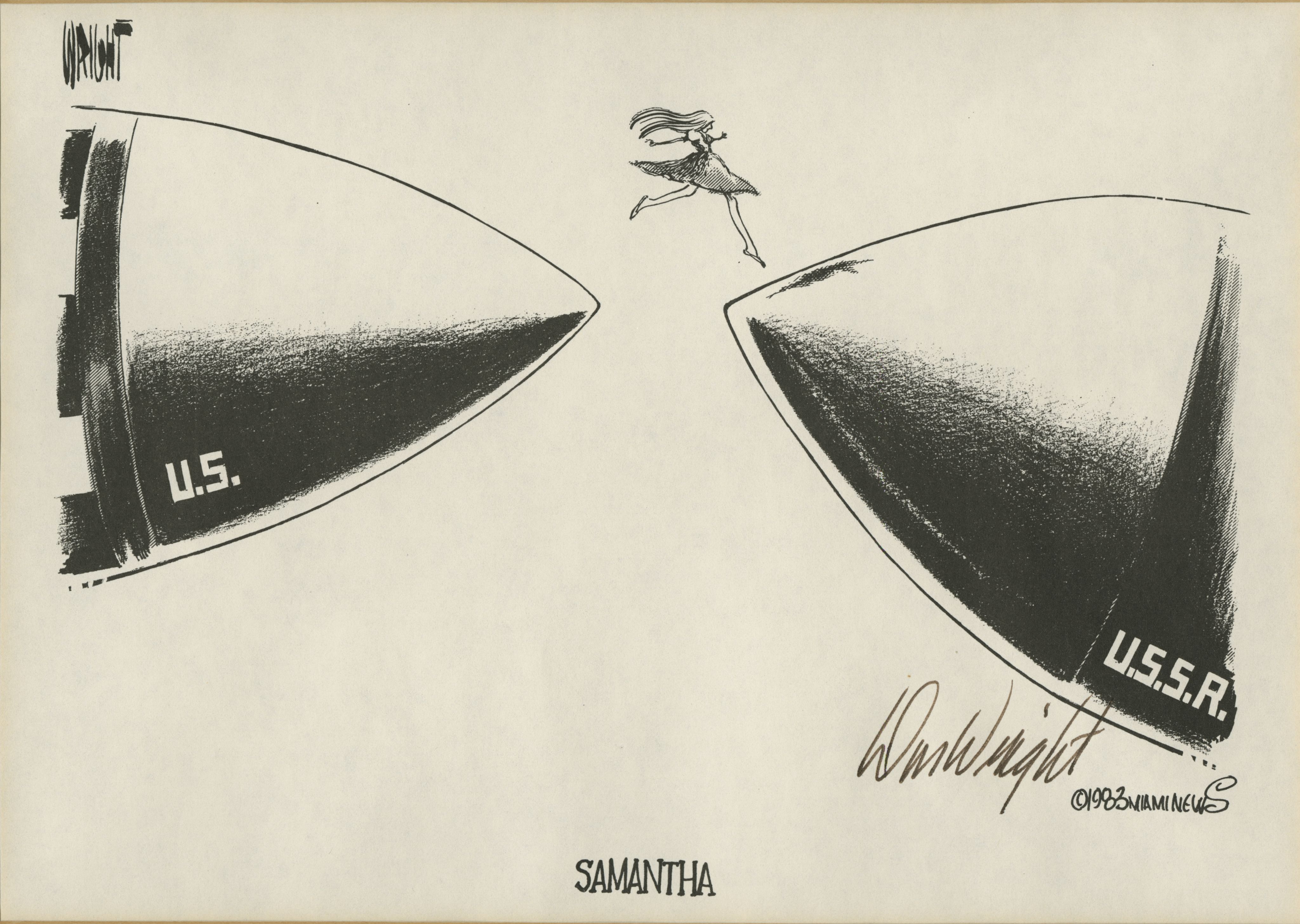
. . . You write that you are anxious about whether there will be a nuclear war between our two countries. And you ask are we doing anything so that war will not break out. . .
Yes, Samantha, we in the Soviet Union are trying to do everything so that there will not be war between our countries, so that in general there will not be war on earth. This is what every Soviet man wants. . . .
We want peace – there is something that we are occupied with: growing wheat, building and inventing, writing books and flying into space. We want peace for ourselves and for all peoples of the planet. For our children and for you, Samantha.
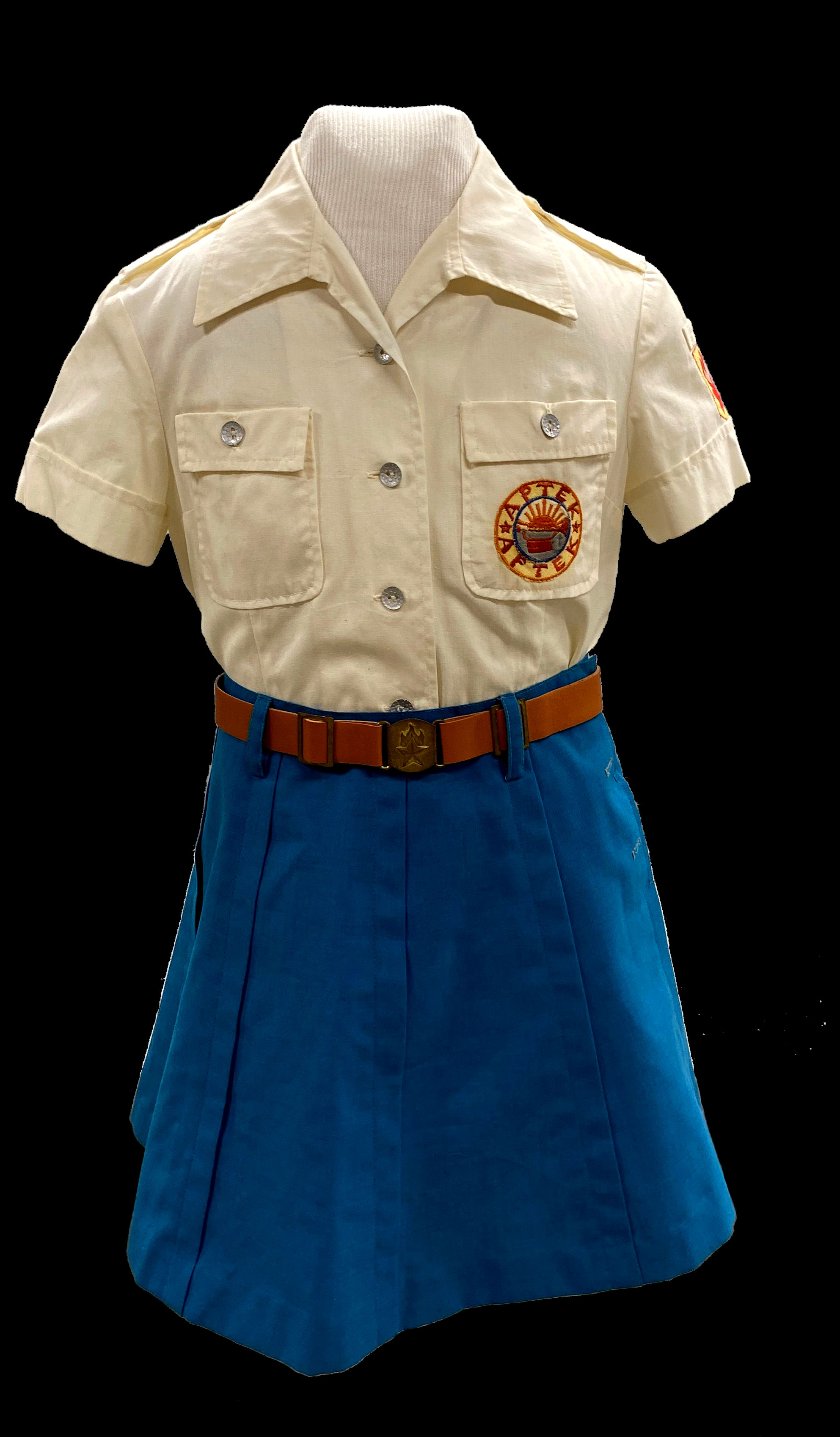
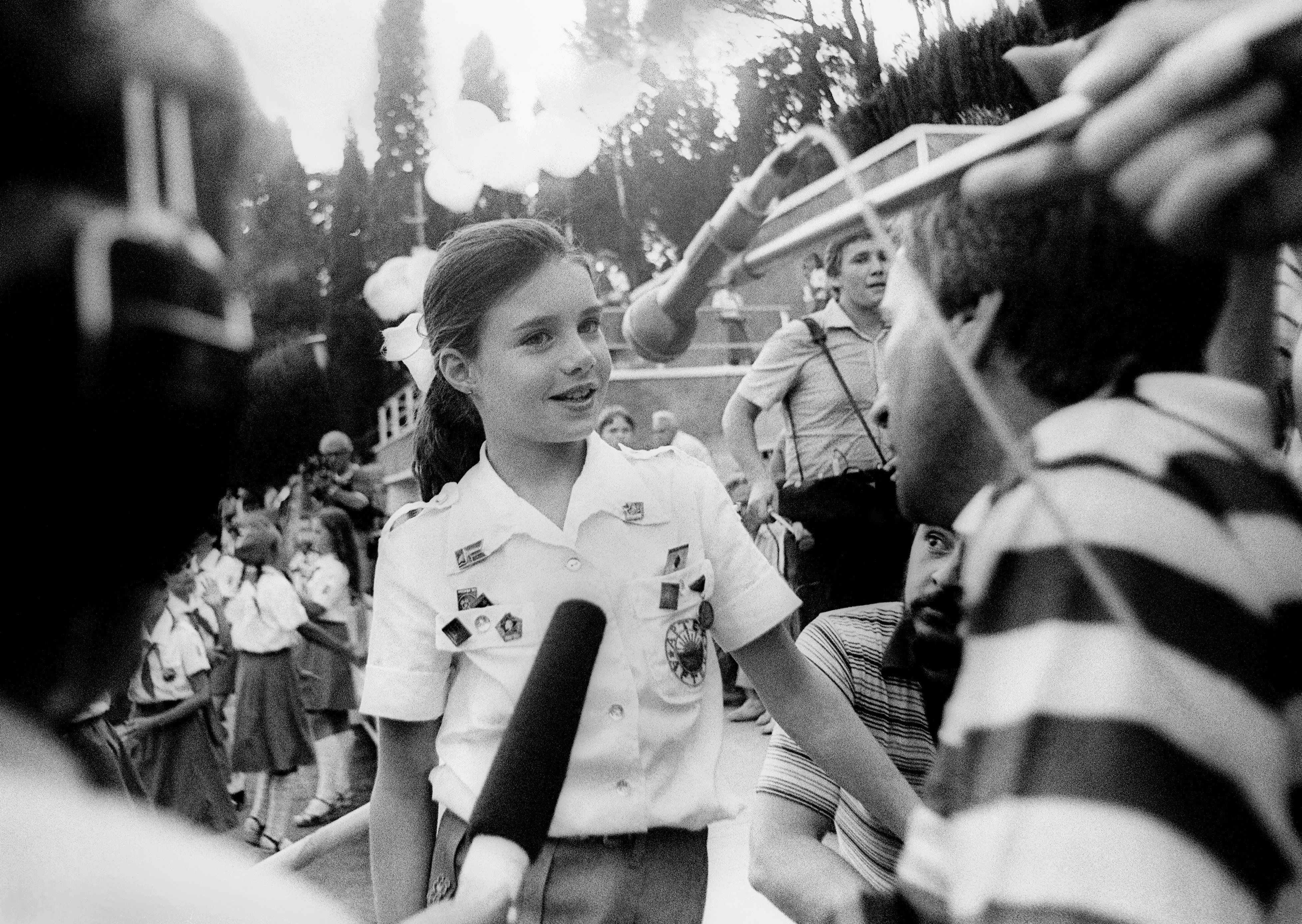
I invite you, if your parents will let you, to come to our country, the best time being the summer. You will find out about our country, meet with your contemporaries, visit an international children’s camp – “Artek” – on the sea. And see for yourself: in the Soviet Union – everyone is for peace and friendship among peoples.
Thank you for your letter. I wish you all the best in your young life.
Y. Andropov
Source 2 - Document
Source 2 - Image
Naming Ceremony for the John T. Jenkins Memorial Bridge
June 10th, 2022
Photo courtesy of Phyllis Graber Jensen / Bates College
In 2022, the City of Lewiston named a bridge in honor of its former mayor, John Jenkins. This is a walking bridge, or pedestrian bridge, that stretches over the Androscoggin River from a park in Auburn to a park in Lewiston.
This photo is from the day of the naming ceremony in June 2022. The people at the front are John Jenkins’ family members. Governor Janet Mills is in the background, as is Auburn mayor Jason Levesque and Lewiston mayor Carl Sheline.
The bridge was named two years after John Jenkins’s death to remember and celebrate his legacy.
Source 3 - Artifact
Source 3 - Artifact
Jenkins's Gi and Black Belt
Late 1900s-Early 2000s
MSM 2012.13.32 and 2012.19.4
This is a gi (pronounced “ghee,” like the word “geese” without the “s”) and black belt that John Jenkins wore. A gi is a uniform traditionally worn in martial arts like karate, judo, and Brazilian Jiu-Jitsu. It includes a jacket and pants – here we only have a jacket.
The black belt has Japanese characters that spell out the name “John Jenkins” and a sewn-on tag that says the belt was made in Tokyo, Japan. The black belt is a sign of pride and accomplishment, since students must work their way up through many levels before they reach it.
John Jenkins not only gained incredible athletic skills through martial arts, but he also shared his skills with other people by teaching them.
The gi has a patch on the shoulder. It is from the John Jenkins Academy, which Jenkins founded in 1995. The words in the center are “BODY, MIND, SPIRIT” in a triangle shape. This gi used to be in a display honoring John Jenkins at an Applebee’s restaurant in Auburn!
Source 4 - Image
Source 4 - Image
John Jenkins Mayoral Portrait
1994-1998
MSM 2012.19.19
This is a framed portrait of John Jenkins. It was the official mayoral portrait that hung in the Lewiston City Hall and the Auburn City Hall.
Jenkins was the first person to serve as mayor of both Lewiston and Auburn. He was elected as Lewiston’s mayor in 1992 and 1995, became a state senator in 1996, and then was elected as Auburn’s mayor in 2006.
In Lewiston, he worked on building cooperation with Auburn. He also tried to engage with young people to try to make them feel more involved in city government. In Auburn, he lowered taxes and worked hard to build trust in the community, especially the growing community of immigrants and refugees from Somalia and other African countries.
Can you picture walking into your local town hall and seeing this portrait hanging on the wall? What can you guess about him just by looking at this picture?
Source 5 - Image
Source 5 - Document
Newspaper Article, "For Mayor of Auburn, a remarkable current event"
January 20th, 2009
Bill Nemitz, Columnist
Portland Press Herald & Maine Sunday Telegram
This newspaper article talks about Maine politician John Jenkins attending President Barack Obama’s inauguration in 2009. He is standing in Washington D.C. and thinking about his personal connections to the story of race in America.
John Jenkins shook Martin Luther King Jr.’s hand a week before his assassination. His own family members were enslaved, and later generations were punished for fighting for the right to vote. John himself had to stand up for what he believed in.
Source 6 - Image
Source 6 - Artifact
Glass Ceiling Commission Certificate
November 21st, 1995
MSM 2012.19.20
This is a framed certificate recognizing John Jenkins’s service on the Glass Ceiling Commission. This Commission was established by the Civil Rights Act of 1991. John Jenkins was one of 21 members serving on the commission. He was appointed by President George H.W. Bush and Congressional leaders.
This was a big deal! John Jenkins hung this certificate on the wall in his home until he donated it to the Maine State Museum in 2012.
The term “glass ceiling” became popular in the late 1980s. It describes the invisible barriers that women and racial minorities face as they approach the top levels of corporate jobs. Imagine trying to get a promotion, but you keep bumping your head against the glass ceiling! For example, a company might not have an official rule saying that directors and CEOs have to be white men, but they’re somehow the only ones who
State of Maine
Proclamation
WHEREAS, Samantha Smith embodied a spirit of peace and goodwill that touched men, women, and children in countries around the world; and
WHEREAS, Samantha Smith’s letter to Soviet Premier Yuri Andropov – – a young girl’s simple message of sincere commitment to humanity – – made great inroads in increasing understanding between the United States and the Soviet Union; and
WHEREAS, it is important to remember that there is much for all of us to do in taking up Samantha Smith’s mission and working to promote the global peace and brotherhood she envisioned,
NOW, THEREFORE, I, JOHN R. McKERNAN, JR. Governor of the State of Maine, I do hereby proclaim June 1, 1987 as
SAMANTHA SMITH DAY
Throughout the State of Maine and urge all citizens, especially students, to observe the day in schools and other suitable places with appropriate ceremony and activity to commemorate and honor Samanta Smith.
In testimony whereof, I have caused the Great Seal of the State of Maine to be hereunto affixed GIVEN under my hand at Augusta this twenty-ninth day of May in the Year of our Lord One Thousand Nine Hundred and Eighty-Seven.
JOHN R. McKERNAN, JR.
Governor
Signature of Rodney S. Quinn
Secretary of State
True Attested Copy
Source 7 - Document
Source 7 - Document
Newspaper Article, "What's important in life in humanity and human struggle"
December 1st, 1996
Boston Globe - Voices of New England
This article was published in a Boston newspaper in 1996, a month after John Jenkins became the first African American man to be elected to the Maine Senate.
It is written in John’s own words, edited from a longer interview with a reporter. He talks about his rapid rise in Maine politics. He mentions his childhood in Newark, New Jersey, where there were neighborhoods of different cultural groups. He talks about his time meeting different kinds of Black students at Bates College.
He says that there is still racism in Lewiston and in Maine, but that his race won’t change how hard he has to work as a state senator.
Source 8 - Image
Source 8 -
Maine Industry Primary Source Sets developed in collaboration between the Maine State Archives, Maine State Library, and Maine State Museum.