
Using Your Voice: Margaret Chase Smith
Voice and Democracy
In a democracy, people have a say in how the country is run. Citizens get to participate in choosing their leaders, usually by voting in an election. Elected officials represent the people and make decisions on their behalf.
Democracies protect important rights. In the United States, the First Amendment says everyone has the right to speak, share ideas, and be heard. It protects the freedom of speech and helps people work together to solve problems. Not everyone can vote (kids can’t until they are 18), but everyone has a voice and can express their opinions and advocate for change.
Citizens can express their views on issues at public meetings, protests, and by communicating with elected officials. Respecting and accepting others with different viewpoints and different ways of life is an important part of being a good citizen. This helps make Maine and the United States a welcoming place for everyone while creating an environment that encourages healthy debate. In a democracy, people can peacefully talk through their problems and create positive change.
Margaret Chase Smith
Summary: In this lesson, you will look at primary sources that show how Margaret Chase Smith, the first woman elected to both the House of Representatives and the Senate, helped Maine and the United States.
Share whatever information from this introduction you feel will help provide context for your students before they investigate the primary sources.
An Unexpected Career in Politic
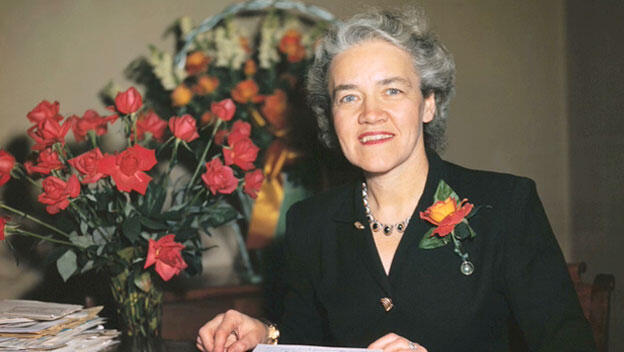
Margaret Chase Smith was born in Skowhegan, Maine, on December 14, 1897. She married Clyde Smith in 1930. Clyde was elected to the United States House of Representatives in 1936. Margaret served as his secretary. When Clyde died in 1940, she took over her husband’s position in Congress. She was reelected four more times. In 1948, she was elected to the United States Senate. She was the first woman ever elected to both the House and the Senate.
Standing Up to Joseph McCarthy
During the late 1940s and 1950s many Americans were worried about Communists secretly working against the United States. Senator Joseph McCarthy claimed that many Communists and spies for the Soviet Union (now called Russia) were working in the U.S. government. Many of his claims were made without proof and resulted in the unfair treatment of many people.
On June 1, 1950, Senator Smith gave her, now famous “Declaration of Conscience” speech on the floor of the U.S Senate. Smith was the first member of the Senate to speak out against the methods used by Senator Joseph McCarthy in his hunt for communists.
It soon became clear that McCarthy had grossly exaggerated his claims. In December of 1954 the U.S. Senate censured (officially disapproving of a member’s actions) McCarthy effectively removing his political power and credibility.
The 1964 Presidential Election
On January 27, 1964, Smith announced she was running for President of the United States. She took her candidacy all the way to the Republican National Convention in San Francisco, where she became the first woman to have her name placed in nomination for the presidency by either of the two major parties. In the final balloting, Smith refused to withdraw and so came in second to the Republican nominee, Senator Barry Goldwater.

Later Life
After serving for more than 32 years in Congress, Senator Smith lost re-election in 1972. She retired to her home in Skowhegan and started planning a library. The Margaret Chase Smith Library opened in 1982 and for the next dozen years, she oversaw the facility, and met with admirers, former constituents, politicians, policymakers, researchers, and school children. Margaret Chase Smith died at her home on Memorial Day, May 29, 1995.
Sources:
- Margaret Chase Smith Library
- Bill of Rights Institute: Joesph McCarthy and Irresponsibility Narrative
- PBS Learning Media: The Speech That Launched the 1950s Red Scare: McCarthy
- Teaching American History: Declaration of Conscience
- Clio Visualizing History: Women in Politics: A Very Short History
The Lesson:
- Present as much as desired from the introductory information below to your students to give them context for the lesson. Depending on reading level, they could read the introduction as a homework assignment, or you could go over it together as a class.
- Students choose (or the teacher assigns) one or more of the primary sources to work with.
- The primary source can be projected/viewed on a big screen by the full class, or printed, so each student has their own copy.
- This is a mystery-solving activity – students should not know details about the sources in advance. Without first seeing the source label information, students practice their observation and analysis skills. They only see the source and have to use their skills to pull out information about it.
- Option 1 – Open inquiry
- The teacher leads a full-class discussion using the prompts “What do you see?” and “What do you wonder?” The class should be encouraged to look at tiny details and pull out clues from each source. This can also work as a whiteboard or post-it note activity, with students writing their own comments in response to the sources.
- Option 2 – Guided worksheets
- Students complete an Analysis Worksheet for each source. They can make educated guesses using whatever information they find in the sources. Note – This can be completed as a class, individually, or in small groups.
- Option 1 – Open inquiry
- Present the source label information (the “answers”) to the students. Were you surprised by anything you learned? Have you found more connections between the different sources?
- Repeat with as many sources as desired.
- Discuss all the sources together. What sources did you work with? What did you learn from them? What questions do you have? How do the different sources connect to the theme or to each other?
- Optional: use the recommended activity prompts and reflection questions for further discussion
Optional Activity #1
Margaret Chase Smith stood up against McCarthyism even when it was not a popular action to take. Think of a cause that is important to you. Write a speech or a letter defending your cause.
Optional Activity #2
Have students create a timeline of women in Congress and/or women who ran for president since 1920.
Reflection Questions:
- What makes a good Representative or Senator? Was Margaret Chase Smith good as Senator? What did she do?
- Margaret Chase Smith stood up against McCarthyism even when it was not a popular action to take and could have damaged her political career. Why do you think she took this risk? In her place, would you have made the same decision?
- In 1964 Margaret Chase Smith ran for president but did not win her party’s nomination. Why do you think we have not yet had a woman president in the United States? Do you think a woman will be president in your lifetime? Why/why not?
Using Your Voice Primary Source Sets developed in collaboration between the Maine State Archives, Maine State Library, and Maine State Museum.